
Writers
Biography of Abraham Valdelomar: the dandy who died at 31
Abraham Valdelomar wrote El Caballero Carmelo and died at 31 after a fall. Explore his life, the magazine Colónida and his impact on Peruvian literature.

Written by Dilmer · Published on August 21, 2026 · Updated on October 11, 2026
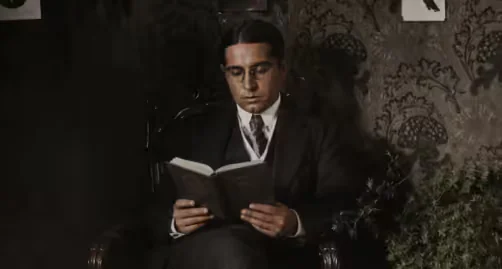
El Conde de Lemos: personal details
| Fact | Detail |
|---|---|
| Full name | Pedro Abraham Valdelomar Pinto |
| Stage name | El Conde de Lemos |
| Age | 31 years old at death in 1919 |
| Date of birth | April 27, 1888 |
| Country of origin | Perú |
| Place of birth | Ica (Perú) |
| Nationality | Peruvian |
| Occupation | Writer, journalist |
| Profession | Literature |
| Years active | 1910 - 1919 |
He died at 31, left just two collections of short stories and nevertheless changed Peruvian literature. Abraham Valdelomar wrote El Caballero Carmelo, a story still read by Peruvian schoolchildren; founded a magazine that ran for only four issues yet helped usher in a new era; and fashioned such an extravagant public persona that he called himself the Count of Lemos. He did all this in barely a decade of work. Here is his biography based on documented facts: his journey from Ica to the center of Lima’s literary scene, what he wrote and the accident in Ayacucho that ended a career just getting started.
Who is Abraham Valdelomar?
Abraham Valdelomar was a Peruvian writer, poet and journalist born in Ica on April 27, 1888. He is the author of the story El Caballero Carmelo and founder of the magazine Colónida, and is regarded, alongside César Vallejo and José María Eguren, as one of the figures who shaped modern Peruvian literature.
Personal information of Abraham Valdelomar
Field: Detail
Full name: Pedro Abraham Valdelomar Pinto
Pseudonym: El Conde de Lemos
Birthdate: 27 April 1888
Place of birth: Ica, Peru
Date of death: 3 November 1919
Age at death: 31 years
Place of death: Ayacucho, Peru
Nationality: Peruvian
Occupation: Narrator, poet, journalist and illustrator
Major work: El Caballero Carmelo (1918)
Childhood and early years of Abraham Valdelomar
Pedro Abraham Valdelomar Pinto was born in Ica on April 27, 1888, although a good part of his childhood was spent in Pisco, next to the sea, a setting that reappears again and again in his stories.
That geographical detail is not decorative. The Peruvian coast of a small town—the port, the family home, the animals, the unhurried life—is the central material of his narrative, and he always wrote it from the nostalgia of someone who had already moved to Lima.
In the capital, he studied and entered journalism at a young age, quickly distinguishing himself as a chronicler and also as an illustrator and caricaturist, a much less familiar side of his work.
At Famosix, the contrast that defines him deserves attention: he wrote with great tenderness about life in the provinces while deliberately creating a provocative public persona in Lima.
Abraham Valdelomar's professional career
His career was short and intense: barely a decade of sustained work, from 1910 and 1919.
He worked as a journalist, held a diplomatic position in Italy and published chronicles, poems, essays and plays in addition to his short stories. Such variety was typical of a generation whose writers still earned their living in newspapers.
The decisive moment came in 1916 with the founding of the magazine Colónida. Only four issues, but they were enough to give a movement its name. That movement broke with prevailing academic conventions and championed a more intimate, provincial and personal literature.
The Colónida movement was not a school with a manifesto and rules; it was closer to an attitude. Its influence can be seen in the writers who followed, including César Vallejo.
That is the contribution Peruvian literary critics widely recognize. Before Colónida, respectable literature in Peru largely imitated European models and spoke in a solemn voice. Afterward, writing about a coastal town or one’s own childhood was no longer considered a minor subject.
In 1918 published El Caballero Carmelo, his best-known collection of short stories. Its title story—about a fighting rooster, told from a child’s point of view—became one of the most widely read texts in Peruvian schools.
His second short-story collection, Los hijos del Sol, appeared posthumously in 1921 and moves away from coastal settings to explore themes from the Inca world.
In August 1919 was chosen regional deputy for Ica, a position he barely had time to serve in.
Main career milestones:
- Around 1910: establishes himself in Lima journalism
- The 1910s: holds a diplomatic post in Italy
- 1916: founds the magazine Colónida and gives a movement its name
- 1918: publishes El Caballero Carmelo, his best-known short-story collection
- 24 August 1919: is elected regional deputy for Ica
- 1919: travels to Ayacucho for the Central Regional Congress
- 1921: posthumous publication of Los hijos del Sol
Notable works by Abraham Valdelomar
| Year | Work | Genre | Detail |
|---|---|---|---|
| 1918 | El Caballero Carmelo | Short stories | His most widely read book, set on the coast |
| 1921 | Los hijos del Sol | Short stories | Published posthumously; explores Inca themes |
| 1916 | Colónida | Magazine | Four issues that opened an era |
| — | La ciudad de los tísicos | Novella | Published in installments |
| — | Tristitia | Poetry | One of his most cited poems |
Personal life of Abraham Valdelomar
His public persona is inseparable from his work. He signed as the Count of Lemos, dressed flamboyantly and cultivated provocative remarks in Lima’s cafés.
That performance had a purpose. Valdelomar understood earlier than almost anyone in Peru that a writer could also be a public figure and that public attention had to be cultivated. A century later, the idea is basic to many artistic careers.
The contrast with his writing is total. The author who scandalized Lima wrote delicate stories about childhood, family and animals in a coastal town, without irony or distance.
At Famosix, we record what is documented and avoid legends attributed to him. Many quotations and anecdotes of uncertain origin circulate about Valdelomar, encouraged both by the persona he created and by the habit of crediting him with every witty remark heard in Lima’s cafés.
Facts about Abraham Valdelomar
- He called himself the Count of Lemos: a noble title that, of course, he did not have.
- He died at the age of 31: His complete work fits into a decade of work.
- His magazine lasted only four issues: yet it gave a movement its name.
- He was also an illustrator and caricaturist: a little-remembered side of him.
- He was a diplomat in Italy: before turning thirty.
- He was elected deputy two months before he died: for his native region, Ica.
- His most famous story is about a rooster: El Caballero Carmelo, read in schools for generations.
His poetry followed the same path as his fiction. "Tristitia", one of his most cited poems, begins with the memory of a childhood by the sea and has been memorized by generations of Peruvian schoolchildren, just like his tale of the rooster.
Death of Abraham Valdelomar
Valdelomar traveled to Ayacucho as a newly elected regional deputy to attend the Central Regional Congress. There he fell on November 1, 1919 and died two days later, on November 3, at the age of 31 years.
It was an abrupt end to a career that had barely begun, and it was seen that way at the time. Peruvian literature suddenly lost a leading figure in its recent renewal, in the same year Ricardo Palma died.
The legacy of Abraham Valdelomar in 2026
More than a century later, El Caballero Carmelo remains one of the most widely read stories in Peru’s schools and an early introduction to literature for millions of Peruvians.
Schools, streets and cultural spaces bear his name, especially in Ica and Pisco, and his work is regularly republished. The Colónida movement remains a subject of Peruvian literary criticism.
At Famosix, we think his life raises one of the most interesting questions in Peruvian literature: what might he have written had he lived another thirty years? What he produced in just a decade was enough to enter school curricula across the country. Find more profiles in our ranking of famous Peruvians.
Conclusion
Abraham Valdelomar renewed Peruvian literature with two short-story collections and a four-issue magazine, then died at 31 after a fall in Ayacucho. His story about a fighting rooster remains school reading a century later. At Famosix, we document his career using verifiable records.
Sources
Public sources cited throughout this biography:
Recommendations
 KodfluxWebsitefrom Kodflux (opens in a new tab)YouTubefrom Kodflux (opens in a new tab)
AI for technical SEO audits and website performance monitoring.
 PagatuWebsitefrom Pagatu (opens in a new tab)
Proposals, contracts, signatures and payments for freelancers in one place.
 NebluxaWebsitefrom Nebluxa (opens in a new tab)
AI fitness app with personalized workouts and nutrition plans.
Frequently asked questions
Who was Abraham Valdelomar?
Abraham Valdelomar was a Peruvian writer, poet and journalist born in Ica on April 27, 1888. He wrote “El Caballero Carmelo” and founded the magazine Colónida, which helped renew Peruvian literature in the early twentieth century.
What is El Caballero Carmelo about?
It is a story about a fighting rooster named Carmelo, told from the viewpoint of a child in a town on the Peruvian coast. It appeared in the book of the same name in 1918 and remains one of the most widely read stories in Peruvian schools.
How did Abraham Valdelomar die?
He died in Ayacucho on November 3, 1919, aged 31, two days after a fall during a trip to the Central Regional Congress, which he attended as a newly elected regional deputy for Ica.
What was Colónida magazine?
It was the literary magazine Valdelomar founded in 1916 and that gave an entire movement its name. Only four issues appeared, but it broke with the period’s academic conventions and opened the way for more intimate writing about life outside the capital.
Why was Valdelomar called the Count of Lemos?
It was the pen name he used to sign his work and shape his public persona: extravagant, provocative and keenly aware of presentation. It reflected his understanding of a writer as a visible public figure.
Editor
Dilmer
Content editor
Published on August 21, 2026 · Updated on October 11, 2026
Famosix editor. He writes, reviews and updates the site’s biographies and editorial selections.
Related biographies
Browse biographiesWriters
Jaime Bayly
Jaime Bayly: Peruvian writer and host of El francotirador. His age, his books, his life with Silvia Núñez del Arco and what he is doing in 2026.
Leer biografíaWriters
Mario Vargas Llosa
Mario Vargas Llosa was a Peruvian-Spanish writer, 2010 Nobel laureate in Literature and a key figure of the Latin American Boom. Explore his life and work.
Leer biografíaWriters
Isabel Allende
Isabel Allende was born in Lima, has sold millions of books and saw a series premiere on Prime Video. Learn her age, story, works and new book of 2026.
Leer biografía