
Políticos
Biography of Alberto Fujimori: president, convicted and deceased
Alberto Fujimori governed Peru for ten years, received a 25-year prison sentence and died in 2024. Read about his life, the 1992 self-coup, trial and pardon.

Written by Dilmer · Published on August 27, 2026 · Updated on September 13, 2026
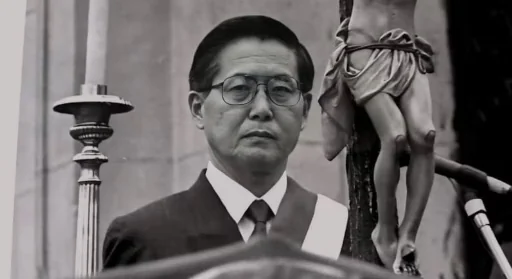
Personal details of Alberto Fujimori
| Fact | Detail |
|---|---|
| Field | Detail |
| Full name | Alberto Kenya Fujimori Inomoto |
| Birthdate | July 28, 1938 |
| Place of birth | Lima, Peru |
| Date of death | September 11, 2024 |
| Age at death | 86 years |
| Nationality | Peruvian |
| Profession | Agricultural engineer |
| Office | President of Peru (1990-2000) |
| Political movement | Cambio 90 |
| Children | Keiko, Hiro, Sachi and Kenji Fujimori |
Few Peruvian lives contain as many documented events and as much public debate as his. Alberto Fujimori governed Peru from 1990 to 2000, dissolved Congress in 1992, sent his resignation by fax from Japan, was extradited from Chile, received a 25-year prison sentence and died in Lima in September 2024. These events are recorded in official documents. This biography follows the dates, offices and court rulings without settling the political assessment of his government, which remains a subject of debate in Peru.
Who was Alberto Fujimori?
Alberto Fujimori was a Peruvian politician and agricultural engineer born on July 28, 1938, in Lima. He served as president of Peru from 1990 to 2000, was sentenced in 2009 to 25 years in prison for human rights violations and died on September 11, 2024.
Childhood and early years of Alberto Fujimori
Alberto Kenya Fujimori Inomoto was born in Lima on July 28, 1938, the son of Japanese immigrants. His birthday coincided with Peru’s Independence Day, a date on which he would later take the presidential oath.
His background was academic, not political. He qualified as an agricultural engineer and pursued a university career that led him to become rector of the Universidad Nacional Agraria La Molina.
That background helps explain his sudden appearance in national politics. When he ran in the 1990 election with the movement Cambio 90, he was largely unknown to voters and had no ties to the traditional parties.
The context matters: in the late eighties, Peru faced hyperinflation and an internal armed conflict, both of which shaped the election.
His status as the son of Japanese immigrants was also a central element of his public presentation in that campaign, and gave him the nickname with which he was identified throughout his political life.
Alberto Fujimori's political career
He won the second round of 1990 against the writer Mario Vargas Llosa and took office on July 28, 1990.
His first far-reaching measure was a severe economic adjustment program, popularly known as "fujishock", aimed at stopping hyperinflation. Its effects—price stabilization on the one hand and social impact on the other—continue to be debated among economists.
The most decisive institutional event of his government occurred on April 5, 1992, when dissolved Congress and intervened in other state institutions. The measure, known as a self-coup, concentrated power outside the constitutional framework then in force and led to the drafting of a new constitution in 1993.
In September 1992 was captured Abimael Guzmán, leader of Sendero Luminoso, a central fact in the outcome of the internal armed conflict.
Between December 1996 and April 1997 the MRTA occupied the residence of the Japanese ambassador. The crisis ended with a military operation to rescue the hostages.
He was re-elected in 1995 and again in 2000, the latter in an election widely questioned. That same year, videos emerged documenting payments and pressure exerted by his adviser Vladimiro Montesinos, which precipitated the end of his government.
In November 2000 traveled to an international summit and faxed his resignation from Japan. Congress did not accept it and declared the vacancy of the presidency on November 21, 2000. He stayed in Japan for several years.
Documented political timeline:
- July 28, 1990: takes office as president of Peru
- April 5, 1992: dissolves Congress and intervenes in other institutions
- September 1992: Abimael Guzmán is captured
- 1995: is reelected president
- November 2000: sends his resignation by fax from Japan; Congress declares the presidency vacant
- November 6, 2005: arrives in Santiago de Chile and is arrested
- September 2007: Chile approves his extradition and he is returned to Peru
The trial and conviction of Alberto Fujimori
After his arrest in Chile in November 2005, the extradition process was resolved in September 2007, when the Chilean justice system authorized it and he was transferred to Peru.
On April 7, 2009, the Peruvian judiciary sentenced him to 25 years in prison as responsible for the cases Barrios Altos (1991) and La Cantuta (1992), as well as two kidnappings. The two cases involved extrajudicial killings attributed to the group known as Grupo Colina.
Two details about that sentence matter. First, it followed a public trial lasting many months and was later upheld on appeal. Second, the case was unprecedented: an elected former president was extradited to his own country, tried and convicted of human rights violations.
He also faced legal proceedings on charges connected to corruption and abuse of power during his presidency.
In December 2017 received a humanitarian pardon that was judicially annulled in October 2018, after which he returned to prison. In December 2023 he was released after the Constitutional Court reinstated that pardon, despite contrary rulings from the Inter-American Court of Human Rights.
Famosix records these rulings for what they are: court decisions, with dates and content. Whether they were justified remains part of public debate, beyond the scope of this biographical record.
Alberto Fujimori's personal life
He was married to Susana Higuchi, with whom he had four children: Keiko, Hiro, Sachi and Kenji. The marriage ended in divorce during his second term.
His daughter Keiko Fujimori served as first lady during part of his presidency and later pursued her own political career, running for president several times. His son Kenji Fujimori also served in Congress.
That family continuity helps explain why his name remains part of Peruvian political debate decades after his presidency and after his death. For twenty years, many election campaigns revolved around support for or opposition to what he represented.
Regarding his private life, beyond what is strictly family and his state of health in recent years, there is little verified public documentation, and at Famosix we limit ourselves to what is verifiable.
Facts about Alberto Fujimori
- He was born on July 28: the same date on which he assumed the presidency.
- He was an agronomist: he served as rector of the Universidad Nacional Agraria La Molina.
- He won as a political outsider: Cambio 90 was not a traditional political party.
- He resigned by fax: he sent his resignation from Japan in November 2000.
- Congress did not accept his resignation: declared the vacancy of the presidency.
- He was the first elected former president extradited to his own country: and convicted of human rights violations.
- His pardon was annulled and later restored: he experienced both developments between 2017 and 2023.
Death of Alberto Fujimori
Alberto Fujimori died on September 11, 2024, aged 86 years, at his home in Lima after having received treatment at different times for cancer diagnosed years earlier.
The Peruvian Government decreed three days of national mourning. His wake and funeral drew thousands of people and numerous officials; coverage reflected the division his legacy continues to cause in Peru.
In judicial terms, his death ended cases still open against him, while final judgments remained part of the historical record.
At Famosix, we think his biography is clearer when the documented record—dates, offices and rulings—is separated from political judgments about his government. The first can be verified; the second remains debated in Peru. Find more Peruvian profiles in our ranking of famous Peruvians.
Conclusion
Alberto Fujimori governed Peru for ten years, dissolved Congress in 1992, resigned from Japan in 2000, was extradited from Chile in 2007 and received a 25-year sentence in 2009. He died in Lima in September 2024, aged 86. Famosix records his life through documented events.
Sources consulted
- France 24: Alberto Fujimori, the story of Peru’s most controversial former president
- PUCP (Punto Edu): Alberto Fujimori, assessment and lessons of a figure who still divides Peru
Sources
Public sources cited throughout this biography:
- France24 — France 24: Alberto Fujimori, the story of Peru’s most controversial former president
- Pucp — PUCP (Punto Edu): Alberto Fujimori, assessment and lessons of a figure who still divides Peru
- Wikipedia (español)
Recommendations
 KodfluxWebsitefrom Kodflux (opens in a new tab)YouTubefrom Kodflux (opens in a new tab)
AI for technical SEO audits and website performance monitoring.
 PagatuWebsitefrom Pagatu (opens in a new tab)
Proposals, contracts, signatures and payments for freelancers in one place.
 NebluxaWebsitefrom Nebluxa (opens in a new tab)
AI fitness app with personalized workouts and nutrition plans.
Frequently asked questions
When did Alberto Fujimori die?
He died on September 11, 2024, aged 86, at his home in Lima after a cancer diagnosis years earlier. The Peruvian government declared three days of national mourning.
Why was Alberto Fujimori convicted?
On April 7, 2009, the Peruvian judiciary sentenced him to 25 years in prison for the Barrios Altos and La Cantuta cases and two kidnappings. The judgment found him responsible for crimes committed during his presidency.
What was the self-coup of April 5, 1992?
It was Fujimori’s decision, as president, to dissolve Congress and intervene in other state institutions on April 5, 1992. It concentrated power outside the constitutional order then in force.
How did Alberto Fujimori resign from the presidency?
In November 2000, he traveled to an international summit and sent his resignation by fax from Japan. Congress rejected it and declared the presidency vacant. He remained in Japan for several years.
How many years did Alberto Fujimori govern Peru?
Ten years, from July 28, 1990, to November 21, 2000. He won the 1990 election with the Cambio 90 movement and was reelected in 1995 and 2000, the latter in a widely contested election.
Editor
Dilmer
Content editor
Published on August 27, 2026 · Updated on September 13, 2026
Famosix editor. He writes, reviews and updates the site’s biographies and editorial selections.
Related biographies
Browse biographiesPoliticians
Marisol Pérez Tello
Discover the biography of Marisol Pérez Tello, lawyer, former minister and presidential candidate in Peru 2026. Her life, career and political achievements.
Leer biografíaPoliticians
Nicanor Boluarte
Who is Nicanor Boluarte? The brother of former president Dina Boluarte, investigated in the 'Los Waykis en la Sombra' case. His legal situation in 2026.
Leer biografíaPoliticians
Pedro Castillo
Pedro Castillo biography: Peru's former president, the 2022 self-coup, his trial and his situation in prison in 2026.
Leer biografía