
Periodistas
Aldo Mariátegui's biography: the uncomfortable journalist
Aldo Mariátegui: age, career at Correo and Perú 21, his family and why he is the most controversial columnist in Peru in 2026.

Written by Dilmer · Published on June 9, 2026 · Updated on September 13, 2026
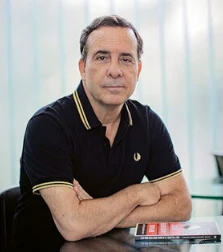
Aldo Mariátegui Bosse is one of the best known —and most controversial— journalists and opinion columnists on the Peruvian media scene. With a surname that weighs enormously in Peru's intellectual history, Mariátegui has spent decades making his voice heard from a liberal, right-wing perspective that clashes head-on with the political legacy of his illustrious ancestor. Editor of the newspaper Correo, radio and television host, author of books and an active columnist at Perú 21, his writing is still among the most read and discussed in the country in 2026. This is his story.
Who is Aldo Mariátegui?
Aldo Mariátegui is a Peruvian lawyer and journalist, born in Lima on December 9, 1964 and a naturalised Spanish citizen. He was editor of the newspaper Correo for more than seven years, host of radio and television programmes —such as “Yo caviar” on Willax— and a columnist for the newspaper Perú 21. He is the grandson of José Carlos Mariátegui, Peru's greatest Marxist intellectual, although he defends centre-right liberal positions and is known for his theory of the “mafia caviar”.
| Field | Detail |
|---|---|
| Full name | Aldo Mariátegui Bosse |
| Date of birth | December 9, 1964 |
| Age (in 2026) | 61 years old |
| Place of birth | Lima, Peru |
| Nationality | Peruvian (naturalised Spanish) |
| Occupation | Journalist, lawyer, columnist |
| Main outlet (2026) | Perú 21 (columnist) |
| TV programme | “Yo caviar” (Willax Televisión) |
| Residence | Madrid, Spain |
Childhood and education
Aldo Mariátegui was born in Lima in 1964, the third child of the printing industrialist Sigfrido Mariátegui Chiappe and Haydée Bosse Molloy. His surname forced him, from childhood, to carry one of the heaviest intellectual legacies in Peru: he is the grandson of the Amauta José Carlos Mariátegui La Chira, founder of the Peruvian Socialist Party and of the celebrated newspaper Amauta, and the great-great-grandson of Francisco Javier Mariátegui, a founding father and liberal politician of independence.
He studied at the Colegio Santa María Marianistas in Lima and then entered the Pontificia Universidad Católica del Perú, where he graduated as a lawyer. He later took the Journalism Master's of the newspaper El País and the Universidad Autónoma de Madrid, in Spain. The combination of legal training and journalistic vocation shaped the way he sees politics: with a lawyer's rigour and a polemicist's passion.
The Mariátegui paradox
The most striking fact about Aldo Mariátegui's life is the contradiction between his lineage and his ideas. His grandfather, José Carlos Mariátegui, is the ultimate icon of the Peruvian left; Aldo, on the other hand, has built his whole career defending liberal and centre-right positions, becoming one of the most relentless critics of the Peruvian left. He is the creator and chief promoter of the concept of the “mafia caviar”, the term he uses to describe the left-wing elite of Lima which, in his view, captured the State and the opinion media.
This paradox —the grandson of Peru's greatest Marxist icon being a staunch anti-leftist— gives his figure an extra element of provocation that he himself has commented on many times.
Career as a journalist: from El Comercio to Correo
Mariátegui is a lawyer by training, but his vocation was always journalism. His career took off as editor of the economy section of the newspaper El Comercio and then as deputy editor of the newspaper Expreso. The great milestone of his career came when he took over the editorship of the newspaper Correo, a post he held for more than seven years until January 2013.
During his time at Correo he gave the paper an editorial line markedly critical of the governments of the day. It was in that period that he drove the investigation into the wealth of former president Alejandro Toledo, which led the journalist Óscar Libón to uncover the existence of the offshore company Ecoteva, starting the celebrated Ecoteva Case. He also served as journalistic vice-president of Grupo Epensa, which owned Correo.
After leaving the paper's editorship, his writing found a new home at the newspaper Perú 21, where to this day he keeps an almost daily opinion column. He has also been a regular contributor to the analysis platform Lampadia.
Radio and television: a voice in every medium
Aldo Mariátegui's broadcasting career is as extensive as his writing:
- 2003: He hosts Conexión económica on Plus TV, from the cable operator Cable Mágico.
- 2010: He takes part as a panellist on Latina Televisión alongside Mónica Delta, Sofía Franco and Claudia Cisneros.
- 2016: He premieres Aldo Mariátegui en Capital on Radio Capital, his first radio hosting job.
- 2017: He joins Ampliación de noticias on RPP Noticias, replacing Raúl Vargas.
- 2018: He hosts ¿Quién tiene la razón? on RPP TV. In July that year he resigns from RPP to start a period abroad.
- 2019: He starts La hora caviar on Willax Televisión, an opinion programme that defined an era.
- 2021-present: He hosts Yo caviar on Willax, established as one of the most controversial opinion slots on Peruvian television.
In November 2015 he also published El octavo ensayo, a book that is both a detailed history of the Peruvian left and a harsh critique of it.
Controversies
No Peruvian journalist has been at the centre of so many controversies in the last two decades:
- In 2016, the organisation Alerta Contra el Racismo, part of the Ministry of Culture, condemned one of his columns for using adjectives that it considered encouraged hatred against indigenous peoples, whom he referred to in that text as an “ignorant mass”.
- During the COVID-19 pandemic he published the column “Elmer Huerta is NOT an epidemiologist”, questioning the opinions of the well known doctor on television; Huerta replied publicly, defending his four specialities.
- In 2023, audio recordings attributed to the DEA were circulated claiming that he had received 600,000 dollars to favour Keiko Fujimori's presidential campaign in 2011. The former DEA director who made the claim publicly retracted it and apologised to him.
- He clashed with the actress Mónica Sánchez when he told her to leave Peru given the possible arrival of Keiko Fujimori in power, setting off a viral reply from the actress.
The specialist magazine Clases de Periodismo described him in 2016 as “the most hated columnist in the Peruvian press”, a title he has known how to capitalise on with irony.
Personal life
His partner is the lawyer Madeleine Osterling, a relationship he himself confirmed publicly in 2015; his family life has always kept a private profile, far from the spotlight he himself frequents. A naturalised Spanish citizen, he has lived in Madrid for several years, from where he keeps writing daily and taking part in the Peruvian political debate through his columns, his programme on Willax and his social networks.
Aldo Mariátegui trivia
- He is the grandson of the Amauta José Carlos Mariátegui and the great-great-grandson of the founding father Francisco Javier Mariátegui, two central figures in Peruvian political history.
- He popularised the term “mafia caviar” to describe the left in Lima, a concept that became part of the country's political vocabulary.
- He was the editor who drove the uncovering of the Ecoteva Case, the investigation that revealed the offshore fortune of former president Alejandro Toledo.
- He graduated as a lawyer from the Pontificia Universidad Católica del Perú and took the Journalism Master's of El País and the Universidad Autónoma de Madrid.
- His programme “La hora caviar” became in 2019 one of the most watched opinion slots on Peruvian cable television.
- He wrote El octavo ensayo (2015), a book devoted to dismantling the history of the Peruvian left from his liberal perspective.
- He has been described by the specialist press as the “most hated columnist” in Peru, a reputation he exploits with sarcasm.
Aldo Mariátegui in 2026
At 61 and from his home in Madrid, Aldo Mariátegui is still one of the most influential voices in the Peruvian political debate. In 2026, a decisive election year, he publishes columns almost daily in Perú 21 on current affairs: he has commented on the government's performance, the running of the ONPE, the Tello case, the dispute over ministries and the presidential run-off between Keiko Fujimori and Roberto Sánchez.
His programme “Yo caviar” continues on the Willax schedule, and his opinions keep polarising: for some he is a reference for the free press; for others, a radical polemicist. What is certain is that, in an election year, his name keeps trending. At Famosix we follow his work closely.
Conclusion
Aldo Mariátegui embodies, like few others, the figure of the uncomfortable journalist: newspaper editor, radio and television host, author of books and a columnist who does not run from controversy. His career is a mirror of the political tensions of contemporary Peru. If you are interested in Peruvian opinion journalism, you can also read the biography of Beto Ortiz, another of the country's most controversial journalists, here on Famosix. If you want to follow political events, have a look too at the biographies of Dina Boluarte and of her brother Nicanor Boluarte.
Sources consulted
- Wikipedia: Aldo Mariátegui
- PlanetadeLibros: Aldo Mariátegui, ficha de autor
- El Comercio: Entrevista a Aldo Mariátegui Bosse, “La izquierda es cruel con sus enemigos”
- El Comercio: Aldo Mariátegui confirma romance con Madeleine Osterling
- La República: Últimas noticias de Aldo Mariátegui
Sources
Public sources cited throughout this biography:
- Wikipedia (español) — Wikipedia: Aldo Mariátegui
- Planetadelibros — PlanetadeLibros: Aldo Mariátegui, ficha de autor
- El Comercio — El Comercio: Entrevista a Aldo Mariátegui Bosse, “La izquierda es cruel con sus enemigos”
- El Comercio — El Comercio: Aldo Mariátegui confirma romance con Madeleine Osterling
- La República — La República: Últimas noticias de Aldo Mariátegui
Recommendations
 KodfluxWebsitefrom Kodflux (opens in a new tab)YouTubefrom Kodflux (opens in a new tab)
AI for technical SEO audits and website performance monitoring.
 PagatuWebsitefrom Pagatu (opens in a new tab)
Proposals, contracts, signatures and payments for freelancers in one place.
 NebluxaWebsitefrom Nebluxa (opens in a new tab)
AI fitness app with personalized workouts and nutrition plans.
Frequently asked questions
How old is Aldo Mariátegui?
In 2026, Aldo Mariátegui is 61 years old (he was born on December 9, 1964).
Is Aldo Mariátegui still the editor of Correo?
No. He left the editorship of Correo in 2013. He is currently a columnist for the newspaper Perú 21.
Who was José Carlos Mariátegui?
He was Aldo's grandfather and the most important Marxist intellectual in Peru. Founder of the Peruvian Socialist Party and of the cultural newspaper *Amauta*, he died in 1930.
Where does Aldo Mariátegui live now?
He currently lives in Madrid, Spain, from where he keeps taking an active part in the Peruvian political debate through media outlets and digital platforms.
Editor
Dilmer
Content editor
Published on June 9, 2026 · Updated on September 13, 2026
Famosix editor. He writes, reviews and updates the site’s biographies and editorial selections.
Related biographies
Browse biographiesJournalists
Beto Ortiz
The full biography of Beto Ortiz: his age, career, his programme on Willax in 2026, private life and why he is the most searched journalist in Peru.
Leer biografía