
Internacionales
Bruce Lee: The Actor Who Took Kung Fu to New Screens
Bruce Lee was born in San Francisco, grew up in Hong Kong and transformed martial arts cinema. Learn about his career, films and Jeet Kune Do legacy.

Written by Dilmer · Published on October 14, 2026 · Updated on October 16, 2026
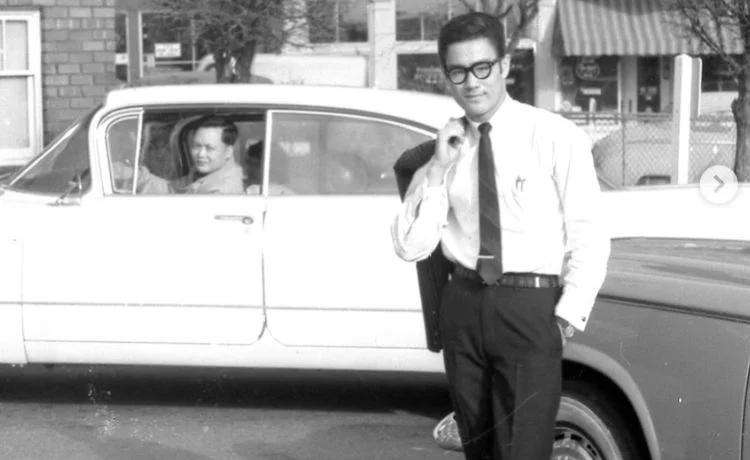
Bruce Lee: personal details
| Fact | Detail |
|---|---|
| Full name | Bruce Jun Fan Lee |
| Stage name | Bruce Lee |
| Age | 32 años al fallecer |
| Date of birth | November 27, 1940 |
| Country of origin | Estados Unidos / Hong Kong |
| Place of birth | San Francisco, California, Estados Unidos |
| Nationality | Chinese American |
| Occupation | Actor, martial artist, film director, martial arts master |
A boy who was already familiar with Hong Kong film studios would end up changing the way a fight is filmed. Bruce Lee was an actor, martial artist and creator of Jeet Kune Do: he was born in San Francisco, grew up in Hong Kong and developed much of his career between Asia and the United States. In just a few years as an adult lead, he went from US television to films like The Big Boss, The Way of the Dragon y Enter the Dragon. His story also helps to understand how a filmmaker sought to show his own ideas about movement and on-screen combat.
Who was Bruce Lee?
Bruce Lee was a Chinese-American actor and martial artist, born on 27 November 1940 in San Francisco and raised in Hong Kong. He portrayed Kato in the series The Green Hornet, developed Jeet Kune Do and starred in films that defined the martial arts cinema of the seventies. He died in Hong Kong on 20 July 1973.
Death of Bruce Lee
Bruce Lee died on 20 July 1973, at the age of 32, in Hong Kong. According to biography published by his family, A forensic investigation attributed the death to brain inflammation caused by a hypersensitivity reaction to a component of a pain reliever. It is preferable to stick to that documented conclusion and not repeat the speculative theories that have circulated since then.
He had finished filming Enter the Dragon, but the film had not yet been released. He had also started Game of Death, a different work that was left unfinished and whose version premiered in 1978 was completed after his death. That difference matters: the filmography includes both titles, although Lee was not able to personally complete the second one.
Childhood and early years
Bruce Jun Fan Lee was born while his parents were on a trip to the United States. His father, Lee Hoi Chuen, worked as a Cantonese opera actor. The family returned to Hong Kong when Bruce was a baby, so he spent his childhood there and not in the city of his birth. He began appearing in films as a child and, before he was 18, had already been in around twenty productions.
His stage training coexisted with interests that would later be inseparable from his public image. At the age of 13, he began studying Wing Chun with Ip Man. He also practiced boxing and dance; in 1958, he won a cha cha championship in Hong Kong. This is a lesser-known fact than his fight scenes, but it shows how much value he placed on rhythm and movement even outside of martial arts.
In 1959 he moved to the United States and settled in Seattle. There, he worked, continued his studies, and attended the University of Washington, where he studied philosophy. It is not accurate to claim that he obtained a university degree: the sources consulted document his attendance at that institution, not a graduation. While studying, he began teaching kung fu to a circle of students that would eventually become his first school.
From martial arts master to television actor
Bruce Lee's classes extended from Seattle to Oakland and Los Angeles. His interest was not limited to teaching movements: he questioned what techniques worked in changing situations and how they could be combined with personal reflection on combat. This process led to Jeet Kune Do, an expression that the Hong Kong Film Archive publicly places at 1967. Its central idea was to adapt the response, simplify it and avoid the rigidity of a single method.
A martial arts exhibition in Long Beach paved his way to television. He appeared as Kato on 1966 The Green Hornet, role he maintained until 1967. Although the series was short-lived, it allowed him to display a form of action that was unusual for American television at the time. He then continued to work as an actor and teach martial arts, but his opportunities to star in Hollywood films were limited.
His return to Hong Kong in the early seventies changed that trajectory. There he signed with Golden Harvest and chained titles that were very well received locally. According to Hong Kong Film Archive, The Big Boss exceeded three million Hong Kong dollars at the box office and Fist of Fury it exceeded four million. These are figures from its release in that market, not worldwide box office takings comparable with current ones.
- 1966–1967: played Kato in the series The Green Hornet.
- 1971: starred The Big Boss, his great comeback to Hong Kong cinema.
- 1972: it premiered Fist of Fury and wrote, directed and starred The Way of the Dragon.
- 1973: completed Enter the Dragon, premiered after his death.
Notable films and projects
The jump between The Big Boss y The Way of the Dragon shows how Bruce Lee gained control over his work. In the third one he not only acted: he also wrote and directed, in a business partnership with producer Raymond Chow. The fight with Chuck Norris at the Roman Coliseum is one of the scenes that the Hong Kong Film Archive highlights from that stage.
Year | Work | Participation of Bruce Lee |
|---|---|---|
1966–1967 | The Green Hornet | He played Kato on television. |
1971 | The Big Boss | Protagonist. |
1972 | Fist of Fury | Protagonist. |
1972 | The Way of the Dragon | Screenwriter, director and star. |
1973 | Enter the Dragon | Protagonist; premiered after her death. |
1978 | Game of Death | Filming started by Lee; final version posthumous. |
Enter the Dragon it was a co-production between Hong Kong and the United States. Its release after Lee's death expanded the international reach of his work. In 2004 he entered the National Film Registry of the United States, a selection of films preserved for their cultural, historical, or aesthetic importance. This recognition corresponds to the film, not an individual award granted to Bruce Lee.
Personal life and thought
Bruce Lee married Linda Emery in 1964. They had two children, Brandon and Shannon. The three names appear in the official family biography, so they are part of his public story without needing to resort to rumors or intimate details. Lee met Linda in Seattle during the time he was studying and teaching martial arts.
His writings and teaching explain why reducing him to his films leaves out an important part of his work. He understood Jeet Kune Do as an open exploration, linked to personal expression, simplicity and the ability to change. This perspective is also seen in his career: he went from acting as a child to teaching, then to playing a television character and finally to writing and directing his own film.
Lee's death interrupted these projects, but his family and various institutions have preserved documents and objects related to his artistic and teaching activities. The Bruce Lee Foundation collaborates with museums that present his work beyond the display of fight choreography.
Interesting facts about Bruce Lee
- In 1958 he won a cha cha championship in Hong Kong and carried notes on dance steps, according to his official biography.
- His first film appearance was when he was still a baby, in Golden Gate Girl According to the Avenue of the Stars in Hong Kong, (1941).
- Before starring The Big Boss, She had already acted in about twenty films during her childhood and adolescence.
- In Seattle he taught martial arts while studying at the University of Washington; his first school was born from those classes.
- The version of Game of Death premiered in 1978 is not equivalent to a film that Lee could have personally completed.
- Enter the Dragon was added to the National Film Registry of the United States in 2004.
Bruce Lee's legacy in 2026
More than half a century after his death, Bruce Lee remains present in spaces dedicated to studying film and martial arts. The Hong Kong Heritage Museum maintains the exhibition A Man Beyond the Ordinary: Bruce Lee, extended until July 2029. Wing Luke Museum of the Asian Pacific American Experience describe its exhibit on Lee as a permanent part of its programming. They are verifiable examples of how its objects, books, and films are preserved for new generations.
In Famosix, his trajectory is better understood as the intersection of three trades: an actor from childhood, a teacher who developed his own proposal, and a filmmaker who sought to control the way action is represented. If you want to continue exploring figures from different cultural scenes, you can visit the section of international biographies.
Conclusion
Bruce Lee's biography bridges Hong Kong cinema with television and the film industry in the United States. His films allow one to follow a quick evolution: from hired leading man to creator who wrote and directed The Way of the Dragon. His legacy is also preserved in archives and museums, not only in scenes repeated by popular culture. Find more trajectories in the international biographies of Famosix.
Sources
Public sources cited throughout this biography:
- Brucelee — biography published by his family
- Filmarchive — Hong Kong Film Archive
- Loc — National Film Registry of the United States
- Heritagemuseum — Hong Kong Heritage Museum
- Wingluke — Wing Luke Museum of the Asian Pacific American Experience
Recommendations
 KodfluxWebsitefrom Kodflux (opens in a new tab)YouTubefrom Kodflux (opens in a new tab)
AI for technical SEO audits and website performance monitoring.
 PagatuWebsitefrom Pagatu (opens in a new tab)
Proposals, contracts, signatures and payments for freelancers in one place.
 NebluxaWebsitefrom Nebluxa (opens in a new tab)
AI fitness app with personalized workouts and nutrition plans.
Frequently asked questions
Where and when was Bruce Lee born?
Bruce Lee was born on 27 November 1940 in San Francisco, California, while his parents were on tour with a Chinese opera company. He spent most of his childhood and adolescence in Hong Kong, the city where he started acting and practicing martial arts.
When did Bruce Lee die and how old was he?
Bruce Lee died on 20 July 1973 in Hong Kong, at the age of 32. He had completed Enter the Dragon, but died before its release. Forensic investigation attributed the death to cerebral edema associated with a hypersensitivity reaction to a painkilling medication.
What is Bruce Lee's Jeet Kune Do?
Jeet Kune Do is the combat expression that Bruce Lee developed from his experience with different martial arts. Its name is usually translated as "the way of the intercepting fist". Lee gave priority to simplicity, direct response and adaptation to the situation, rather than repeating a rigid form.
What are the most well-known films of Bruce Lee?
Among his most notable films are The Big Boss (1971), Fist of Fury (1972), The Way of the Dragon (1972) and Enter the Dragon (1973). The latter was released after his death. Game of Death appeared in 1978, but Lee did not live to finish the film he had started filming.
Did Bruce Lee direct any film?
Yes. Bruce Lee wrote, directed and starred in The Way of the Dragon, released in 1972. The film includes his fight with Chuck Norris at the Colosseum in Rome. This project gave him greater creative control than his previous works as a leading man of action films in Hong Kong.
Editor
Dilmer
Content editor
Published on October 14, 2026 · Updated on October 16, 2026
Famosix editor. He writes, reviews and updates the site’s biographies and editorial selections.
Related biographies
Browse biographiesInternational
Brian Tracy
Learn about Brian Tracy, Canadian author and speaker, his books on productivity, goals and professional development.
Leer biografíaInternational
Brandon Lee
Brandon Bruce Lee was an American actor and Bruce Lee's son. Explore his career, roles in Rapid Fire and The Crow, and enduring film legacy.
Leer biografíaInternational
Dolph Lundgren
Dolph Lundgren played Ivan Drago in Rocky IV. Learn about his engineering background, films, directorial work, and current projects.
Leer biografía