
Writers
César Vallejo biography: the poet who foresaw his death
César Vallejo wrote that he would die in Paris, and he did. Explore his life, books, the Trujillo prison where he wrote Trilce and his final years.

Written by Dilmer · Published on August 24, 2026 · Updated on September 13, 2026
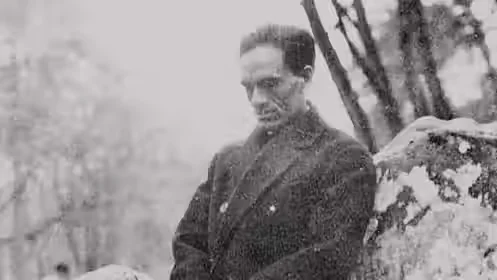
Personal details of César Vallejo
| Fact | Detail |
|---|---|
| Field | Detail |
| Full name | César Abraham Vallejo Mendoza |
| Date of birth | March 16, 1892 |
| Place of birth | Santiago de Chuco, La Libertad, Peru |
| Date of death | April 15, 1938 |
| Age at death | 46 years |
| Place of death | Paris, France |
| Nationality | Peruvian |
| Occupation | Poet, fiction writer and journalist |
| Major works | Los heraldos negros, Trilce, Poemas humanos |
| Wife | Georgette Marie Philippart |
“I will die in Paris with a rainstorm, on a day that I can already remember,” he wrote in a poem. He died there on April 15, 1938. César Vallejo is among the most studied Peruvian poets at home and abroad. He wrote Los heraldos negros and Trilce, a book that broke with the conventions of Spanish-language poetry and began to take shape while he was imprisoned. Here is his documented story, from Santiago de Chuco through a prison in Trujillo to a clinic in Paris.
Who was César Vallejo?
César Vallejo was a Peruvian poet and writer born on March 16, 1892, in Santiago de Chuco, La Libertad. He wrote Los heraldos negros, Trilce and Poemas humanos, and is regarded as one of the most influential voices in twentieth-century Spanish-language poetry.
Childhood and early life of César Vallejo
César Abraham Vallejo Mendoza was born in Santiago de Chuco, a mountain town in La Libertad, on March 16, 1892. He was the youngest of eleven children, born to Francisco de Paula Vallejo Benítez and María de los Santos Mendoza Gurrionero.
His family considered preparing him for the priesthood, a detail that helps explain the biblical and liturgical language running through all his poetry, even the rebellious work informed by his political activism.
He studied at Centro Escolar Nº 127 in his town and finished secondary school at Colegio San Nicolás de Huamachuco in 1909. He later began studying philosophy and literature at the Universidad de Trujillo and law at San Marcos in Lima. Financial difficulties repeatedly interrupted his studies, and he worked as a teacher and on a sugar estate.
That detail is often overlooked. Vallejo did not write from a comfortable position: economic hardship followed him for most of his life, both in Peru and later in Europe.
César Vallejo’s literary career
His first book, Los heraldos negros, was published in 1918 and opens with one of the most cited lines in Spanish: “There are blows in life, so hard... I don’t know.” The book still shows Rubén Darío’s modernist influence, but Vallejo’s own voice is already emerging.
Then came the episode that changed his writing. In 1920, during a popular uprising in Santiago de Chuco, he was accused of participating, a charge he always denied. He spent about three and a half months in prison in Trujillo.
Out of that experience came Trilce, published in 1922. The book deserves a closer look: it is perhaps the most radical work written in Spanish in the twentieth century. Vallejo breaks syntax, invents words and uses numbers and blank spaces as poetic materials. Almost no one understood it when it appeared.
In 1923 he traveled to Paris, where he spent the rest of his life. There he met Juan Gris and Vicente Huidobro, founded the magazine Favorables París Poema in 1926 and moved closer to communism, traveling to the Soviet Union and supporting the Republican cause during the Spanish Civil War.
He did not live to see his two major later books published. Poemas humanos and España, aparta de mí este cáliz appeared in 1939, a year after his death, through the efforts of his widow Georgette and the historian Raúl Porras Barrenechea.
Major milestones in his career:
- 1918: publishes Los heraldos negros, his first poetry collection
- 1920: is imprisoned in Trujillo after a popular uprising
- 1922: publishes Trilce, the book that breaks with modernism
- 1923: settles in Paris, where he lives for fifteen years
- 1926: founds the magazine Favorables París Poema
- 1937: writes España, aparta de mí este cáliz during the Spanish Civil War
- 1939: his posthumous books are published, a year after his death
Major works by César Vallejo
| Year | Work | Genre | Detail |
|---|---|---|---|
| 1918 | Los heraldos negros | Poetry | His first book, still rooted in modernism |
| 1922 | Trilce | Poetry | An avant-garde break, written partly in prison |
| 1923 | Escalas melografiadas | Fiction | Sketches and short stories |
| 1923 | Fabla salvaje | Short novel | Published before his journey to Europe |
| 1939 | Poemas humanos | Poetry | Posthumous, edited by his widow Georgette |
| 1939 | España, aparta de mí este cáliz | Poetry | Posthumous, about the Spanish Civil War |
César Vallejo’s personal life
In 1934 he married Georgette Marie Philippart, a French woman considerably younger than him, in Paris; they lived together until his death.
Her role after 1938 was decisive: she organized, defended and published his posthumous manuscripts, and spent decades promoting work that still had a limited audience. Without her efforts, much of what we now read by Vallejo might never have appeared in book form.
His political commitment was explicit. He joined the communist movement, traveled to the Soviet Union three times and actively supported the Republic during the Spanish Civil War, a cause running through his final book.
Famosix records the documented facts and avoids romanticizing them. Vallejo faced real material hardship in Paris, not a decorative version of literary poverty, as his correspondence shows.
Facts about César Vallejo
- He wrote about his own death: the poem “Piedra negra sobre una piedra blanca” says he would die in Paris, as he did.
- He was the youngest of eleven children: he grew up in a large household in the mountains of La Libertad.
- His family wanted him to become a priest: hence the biblical language throughout his poetry.
- He wrote much of _Trilce_ while imprisoned: he spent three and a half months in the Trujillo prison.
- His two major later books were published posthumously: he never saw them in print.
- He founded a magazine in Paris: Favorables París Poema, in 1926.
- He traveled to the Soviet Union three times: his political commitment was active, not merely declared.
César Vallejo’s death
César Vallejo died on April 15, 1938, at around twenty past nine in the morning, in a clinic on Boulevard Arago in Paris. He was 46 years old.
The exact cause of death was never firmly established. His doctors reached no conclusive diagnosis, and later explanations have included tuberculosis and a recurrence of malaria contracted years earlier in Peru. What is documented is that he was ill for several weeks, with a high fever and no improvement.
He is buried in Montparnasse Cemetery in Paris, where readers from Peru and around the world still visit his grave nearly ninety years later.
César Vallejo’s legacy in 2026
Almost ninety years after his death, Vallejo remains required reading in Peruvian schools and one of the most translated and studied Spanish-language authors at universities around the world.
His hometown, Santiago de Chuco, holds ongoing commemorative activities. Casa de la Literatura Peruana and other institutions organize annual programs about his work, especially around March and April, the months of his birth and death.
At Famosix, we believe his work endures for a simpler reason than anniversaries: Trilce still sounds modern more than a century after publication, and few books from any period pass that test. Find more profiles in our ranking of notable Peruvians.
Conclusion
César Vallejo left a mountain town in La Libertad and wrote one of the most radical books in Spanish-language poetry. He died in poverty in Paris, as he had anticipated in a poem. Famosix records his life using documented facts.
Sources consulted
- Casa de la Literatura Peruana: the story behind the publication of César Vallejo’s works
- Biblioteca Nacional del Perú: César Vallejo’s works enter the UNESCO Memory of the World Programme
Sources
Public sources cited throughout this biography:
- Casadelaliteratura — Casa de la Literatura Peruana: the story behind the publication of César Vallejo’s works
- Bnp — Biblioteca Nacional del Perú: César Vallejo’s works enter the UNESCO Memory of the World Programme
- Wikipedia (español)
Recommendations
 KodfluxWebsitefrom Kodflux (opens in a new tab)YouTubefrom Kodflux (opens in a new tab)
AI for technical SEO audits and website performance monitoring.
 PagatuWebsitefrom Pagatu (opens in a new tab)
Proposals, contracts, signatures and payments for freelancers in one place.
 NebluxaWebsitefrom Nebluxa (opens in a new tab)
AI fitness app with personalized workouts and nutrition plans.
Frequently asked questions
Who was César Vallejo?
César Vallejo was a Peruvian poet born on March 16, 1892, in Santiago de Chuco, La Libertad. He is regarded as a major twentieth-century Spanish-language poet and wrote 'Los heraldos negros' and 'Trilce'.
What are César Vallejo’s most important works?
'Los heraldos negros' (1918), 'Trilce' (1922), and the posthumous books 'Poemas humanos' and 'España, aparta de mí este cáliz', both published in 1939. He also wrote fiction, plays and journalism.
Why was César Vallejo imprisoned?
In 1920, he was accused of taking part in a popular uprising in Santiago de Chuco, a charge he always denied. He spent about three and a half months in the Trujillo prison, where he wrote much of 'Trilce'.
What caused César Vallejo’s death?
He died on April 15, 1938, in a Paris clinic, aged 46, after several weeks of illness. The precise cause was never established: tuberculosis and a recurrence of malaria have been suggested, but there was no conclusive diagnosis.
Where was César Vallejo born?
He was born in Santiago de Chuco, a mountain town in La Libertad in northern Peru, on March 16, 1892. He was the youngest of the eleven children of Francisco de Paula Vallejo and María de los Santos Mendoza.
Editor
Dilmer
Content editor
Published on August 24, 2026 · Updated on September 13, 2026
Famosix editor. He writes, reviews and updates the site’s biographies and editorial selections.
Related biographies
Browse biographiesWriters
Jaime Bayly
Jaime Bayly: Peruvian writer and host of El francotirador. His age, his books, his life with Silvia Núñez del Arco and what he is doing in 2026.
Leer biografíaWriters
Mario Vargas Llosa
Mario Vargas Llosa was a Peruvian-Spanish writer, 2010 Nobel laureate in Literature and a key figure of the Latin American Boom. Explore his life and work.
Leer biografíaWriters
Isabel Allende
Isabel Allende was born in Lima, has sold millions of books and saw a series premiere on Prime Video. Learn her age, story, works and new book of 2026.
Leer biografía