
Writers
Gabriel García Márquez biography: the Nobel laureate who created Macondo
Gabriel García Márquez created Macondo, won the Nobel Prize and sold millions of copies of Cien años de soledad. Explore his life, works and legacy.

Written by Dilmer · Published on August 19, 2026 · Updated on September 13, 2026
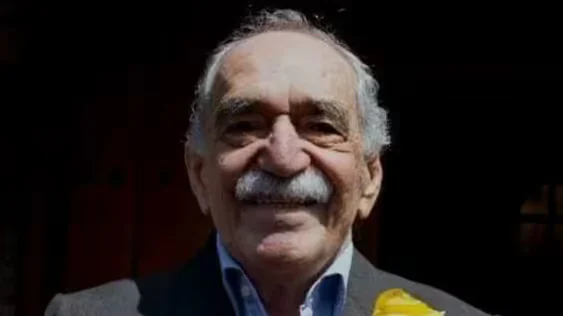
Personal details of Gabriel García Márquez
| Fact | Detail |
|---|---|
| Field | Detail |
| Full name | Gabriel José de la Concordia García Márquez |
| Nickname | Gabo |
| Date of birth | March 6, 1927 |
| Place of birth | Aracataca, Magdalena, Colombia |
| Date of death | April 17, 2014 |
| Age at death | 87 years |
| Place of death | Mexico City |
| Nationality | Colombian |
| Occupation | Writer and journalist |
| Nobel Prize | Literature, 1982 |
| Major work | Cien años de soledad (1967) |
A fictional town became one of the most famous places in Latin American literature. Gabriel García Márquez created Macondo in Cien años de soledad and changed the way the world reads Latin America. He won the Nobel Prize in 1982, died in 2014 and, in December 2024, Netflix released an adaptation he had refused to authorize during his lifetime. Here is his documented story: from his grandparents’ home in Aracataca to his speech in Stockholm, the books he wrote and what remains of his work more than a decade after his death.
Who was Gabriel García Márquez?
Gabriel García Márquez was a Colombian writer and journalist born on March 6, 1927, in Aracataca. He wrote Cien años de soledad and El amor en los tiempos del cólera, won the Nobel Prize in Literature in 1982 and became a central figure in magical realism.
Childhood and early years of Gabriel García Márquez
Gabriel José de la Concordia García Márquez was born in Aracataca, a small banana-growing town on Colombia’s Caribbean coast, on March 6, 1927.
The key to his work lies there. He lived with his maternal grandparents until he was eight years old, and that household—his grandmother recounting impossible events as everyday news and his grandfather describing civil wars—later provided the model for his fiction.
This explains magical realism better than an academic definition. His grandmother recounted extraordinary events without emphasizing their strangeness, and as an adult he realized that tone was what his long-planned novel needed.
He studied law without completing the degree and entered journalism in the late 1940s, a profession he practiced throughout his life and considered as important as literature.
That fact often receives too little attention: García Márquez was a reporter before he was a novelist, and his prose retained the discipline of relating concrete events.
Gabriel García Márquez’s career
His early books—La hojarasca (1955), El coronel no tiene quien le escriba (1961), La mala hora (1962)—reached limited audiences and sold modestly.
Everything changed in 1967 with Cien años de soledad, the novel about seven generations of the Buendía family in Macondo. It became an immediate global success and one of the bestselling and most widely translated works in Spanish, behind only Don Quixote in some estimates.
Its impact goes beyond sales. The novel brought Latin American literature to the center of the world stage and helped propel a generation of writers known as the boom.
Later books included El otoño del patriarca (1975), Crónica de una muerte anunciada (1981), El amor en los tiempos del cólera (1985) y El general en su laberinto (1989), among others.
In 1982 he received the Nobel Prize in Literature. His acceptance speech, “The Solitude of Latin America,” is one of the prize’s most cited. Before the Swedish Academy, he addressed political violence and dictatorship in the region.
He never abandoned journalism. He founded and funded institutions that trained Latin American reporters and continued writing chronicles and reportage into old age.
Major career milestones:
- Late forties: begins working as a journalist
- 1955: publishes La hojarasca, his first novel
- 1967: publishes Cien años de soledad and achieves worldwide success
- 1981: publishes Crónica de una muerte anunciada
- 1982: receives the Nobel Prize in Literature
- 1985: publishes El amor en los tiempos del cólera
- 2024: Netflix releases the adaptation of Cien años de soledad
Selected works by Gabriel García Márquez
| Year | Work | Genre | Detail |
|---|---|---|---|
| 1961 | El coronel no tiene quien le escriba | Novella | One of his most admired works |
| 1967 | Cien años de soledad | Novel | His major work, the story of Macondo |
| 1975 | El otoño del patriarca | Novel | Portrait of a Latin American dictator |
| 1981 | Crónica de una muerte anunciada | Novella | Based on a real crime |
| 1985 | El amor en los tiempos del cólera | Novel | His major novel about love and old age |
| 2002 | Vivir para contarla | Memoir | First volume of his autobiography |
Gabriel García Márquez’s personal life
He was married to Mercedes Barcha from 1958 until his death, more than five decades. They had two sons, Rodrigo and Gonzalo.
Mercedes’s role in the writing of Cien años de soledad is part of the book’s history: she supported their household while he wrote full-time for months, during a period of severe financial strain.
He spent much of his adult life in Mexico, where he settled and eventually died. He also spent time in Europe and maintained a close connection to Cuba, including a personal friendship with Fidel Castro that drew lasting criticism.
Famosix records this as a public, documented relationship that he never denied and that other Latin American writers criticized for decades.
Facts about Gabriel García Márquez
- His grandmother raised him on extraordinary stories: her storytelling shaped the tone of his magical realism.
- He was a journalist throughout his life: he considered reportage as important as fiction.
- His first novel sold few copies: success came only twelve years later.
- His Nobel speech discussed dictatorships: it was titled “The Solitude of Latin America.”
- He refused to authorize an adaptation of his major novel: the series arrived ten years after his death.
- He lived and died in Mexico: although he usually wrote about Colombia’s Caribbean coast.
- He founded journalism schools: he funded training for Latin American reporters.
Gabriel García Márquez’s death
Gabriel García Márquez died on April 17, 2014 in Mexico City, aged 87.
His death prompted official responses in Colombia and Mexico, with tributes in both countries and worldwide coverage accorded to few cultural figures. Large public gatherings took place in Aracataca, his hometown, and Mexico City.
His remains rest in Cartagena de Indias, Colombia, following an agreement between his family and the authorities of both countries on a question he had not settled during his lifetime.
Gabriel García Márquez’s legacy in 2026
On December 11, 2024, Netflix released the first season of its adaptation of Cien años de soledad: eight episodes available in 190 countries, filmed in Colombia and in Spanish.
The premiere carried particular symbolic weight. García Márquez had refused for decades to approve a screen adaptation. His sons eventually agreed on two conditions: it had to be filmed in Colombia and in Spanish.
In Aracataca, the first episode was screened outdoors in the town square of the place that inspired Macondo.
At Famosix, we believe the series’ most measurable effect may be on publishing rather than television: adaptations often introduce the original book to readers who had never opened it. That is one way a classic remains alive. Find more international profiles in our ranking of notable Peruvians.
Conclusion
Gabriel García Márquez created a town called Macondo and helped bring Latin American literature to a worldwide audience. He won the Nobel Prize in 1982, and his major novel reached the screen ten years after his death. Famosix records his career using documented facts.
Sources consulted
Sources
Public sources cited throughout this biography:
- Nobelprize — NobelPrize.org: Gabriel García Márquez – Biographical
- Britannica — Britannica: Gabriel García Márquez
- Wikipedia (español)
Recommendations
 KodfluxWebsitefrom Kodflux (opens in a new tab)YouTubefrom Kodflux (opens in a new tab)
AI for technical SEO audits and website performance monitoring.
 PagatuWebsitefrom Pagatu (opens in a new tab)
Proposals, contracts, signatures and payments for freelancers in one place.
 NebluxaWebsitefrom Nebluxa (opens in a new tab)
AI fitness app with personalized workouts and nutrition plans.
Frequently asked questions
Who was Gabriel García Márquez?
Gabriel García Márquez was a Colombian writer and journalist born on March 6, 1927, in Aracataca. He wrote 'Cien años de soledad', won the Nobel Prize in Literature in 1982 and became a central figure in magical realism.
What is Cien años de soledad about?
It follows seven generations of the Buendía family in Macondo, an imaginary town on Colombia’s Caribbean coast. Everyday events and fantastic elements are narrated with equal naturalness, a defining feature of magical realism.
When did Gabriel García Márquez die?
He died on April 17, 2014, in Mexico City, aged 87. He had lived much of his adult life there. His death prompted official mourning in both Mexico and Colombia.
Is there a series based on Cien años de soledad?
Yes. Netflix released the adaptation on December 11, 2024, as an eight-episode first season available in 190 countries. Its first episode was screened in Aracataca’s town square.
Why was he called Gabo?
“Gabo” is an affectionate short form of Gabriel used by friends and family and later throughout Latin America. It is so familiar that a cultural center devoted to his work and journalistic legacy bears the name.
Editor
Dilmer
Content editor
Published on August 19, 2026 · Updated on September 13, 2026
Famosix editor. He writes, reviews and updates the site’s biographies and editorial selections.
Related biographies
Browse biographiesWriters
Jaime Bayly
Jaime Bayly: Peruvian writer and host of El francotirador. His age, his books, his life with Silvia Núñez del Arco and what he is doing in 2026.
Leer biografíaWriters
Mario Vargas Llosa
Mario Vargas Llosa was a Peruvian-Spanish writer, 2010 Nobel laureate in Literature and a key figure of the Latin American Boom. Explore his life and work.
Leer biografíaWriters
Isabel Allende
Isabel Allende was born in Lima, has sold millions of books and saw a series premiere on Prime Video. Learn her age, story, works and new book of 2026.
Leer biografía