
Writers
Jorge Luis Borges biography: books and blindness
Jorge Luis Borges went blind while directing a library of nearly a million books and never won the Nobel Prize. His life, stories and years in Geneva.

Written by Dilmer · Published on August 14, 2026 · Updated on September 13, 2026
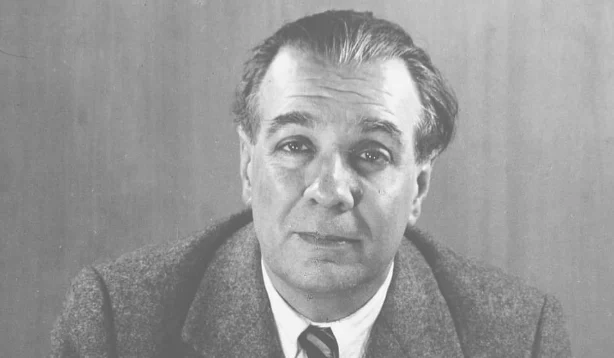
Personal details of Jorge Luis Borges
| Fact | Detail |
|---|---|
| Field | Detail |
| Full name | Jorge Francisco Isidoro Luis Borges Acevedo |
| Date of birth | August 24, 1899 |
| Place of birth | Buenos Aires, Argentina |
| Date of death | June 14, 1986 |
| Age at death | 86 years |
| Place of death | Geneva, Switzerland |
| Nationality | Argentine |
| Occupation | Writer, poet, essayist and librarian |
| Major works | Ficciones (1944) and El Aleph (1949) |
| Notable award | Cervantes Prize (1980) |
He was appointed director of a library holding nearly a million books just as he was losing his sight. Jorge Luis Borges called it “a splendid irony” and worked there for almost twenty years. He wrote some of the twentieth century’s most influential stories—El Aleph, “La biblioteca de Babel” and “El jardín de senderos que se bifurcan”—yet never won the Nobel Prize, one of the award’s most discussed omissions. Here is his documented story, from Buenos Aires to Geneva, and the works he wrote.
Who was Jorge Luis Borges?
Jorge Luis Borges was an Argentine writer, poet and essayist born in Buenos Aires on August 24, 1899. The author of Ficciones and El Aleph, he renewed the modern short story with labyrinths, mirrors and infinities and became one of the twentieth century’s most influential writers.
Childhood and early years of Jorge Luis Borges
Jorge Francisco Isidoro Luis Borges Acevedo was born in Buenos Aires on August 24, 1899, into a family with an extensive library and English as a second household language, thanks to his maternal grandmother.
That detail shaped his entire education. Borges read English classics in the original as a child and often said that the most important event of his life had been his father’s library rather than anything outside it.
In 1914 the family traveled to Europe so his father could receive eye treatment—he had the inherited condition that would later affect Borges. The First World War left them stranded in Geneva, where the teenager completed his studies and learned French and German.
He later lived in Spain until 1921, taking part in literary avant-garde circles. He returned to Buenos Aires with a European education unusual among Argentine writers of his generation.
Geneva gives his life a circular shape: the city where he spent his teenage years was also the one where he chose to die seventy years later.
Jorge Luis Borges’s career
He began as a poet. In 1923 he published Fervor de Buenos Aires, a collection devoted to the neighborhoods and streets of his city, far removed from the labyrinth stories for which he later became known.
The shift came in the 1930s and 1940s. Historia universal de la infamia (1935) anticipated his style, but Ficciones (1944) and El Aleph (1949) were the books that changed the short story.
It is hard to overstate what he achieved. Borges devised stories that work like philosophical problems: infinite libraries, books containing every book, a point in space from which all points can be seen, people dreaming other people. He did it in a few pages of precise prose.
His influence reached well beyond Spanish-language literature. European and American writers cited him as a direct influence, and several of his ideas anticipated later debates about information, memory and networks.
In 1955 he was appointed director of the Biblioteca Nacional de Argentina, serving until 1973 as his eyesight declined almost completely.
He received the Cervantes Prize in 1980, sharing it with Gerardo Diego. The Nobel Prize never came, although his name was mentioned among contenders for years.
Major career milestones:
- 1923: publishes Fervor de Buenos Aires, his first poetry collection
- 1935: publishes Historia universal de la infamia
- 1944: publishes Ficciones, his landmark story collection
- 1949: publishes El Aleph
- 1955: becomes director of the Biblioteca Nacional de Argentina
- 1960: publishes El hacedor
- 1980: receives the Cervantes Prize
Selected works by Jorge Luis Borges
| Year | Work | Genre | Detail |
|---|---|---|---|
| 1923 | Fervor de Buenos Aires | Poetry | His first book, devoted to his city |
| 1935 | Historia universal de la infamia | Stories | Anticipates his mature style |
| 1944 | Ficciones | Short stories | Includes “La biblioteca de Babel” |
| 1949 | El Aleph | Short stories | One of his most cited books |
| 1960 | El hacedor | Prose and poetry | A mix of short forms |
| 1949-1986 | Essays and lectures | Essays | Published in many volumes |
Jorge Luis Borges’s personal life
His blindness shaped his adult life. The inherited condition began to appear around 1930 and progressed until he had almost no sight.
He turned the coincidence of his appointment at the National Library—nearly a million books he could no longer read—into poetry about the irony of receiving books and darkness at the same time.
From then on, he worked by dictating. His mother, Leonor Acevedo, and later friends and assistants wrote down works he composed in his mind. Having to remember a text before speaking it may help explain his extreme brevity and precision.
His political views stirred controversy and remain debated. Some public statements in support of military regimes brought lasting criticism, although he later qualified them.
In 1986 he married María Kodama, his collaborator and literary executor, a few months before his death in Geneva.
Famosix records the documented facts and leaves political judgment to readers. His literary work and public opinions are distinct, both part of the record; one need not be distorted to explain the other.
Facts about Jorge Luis Borges
- He directed a library while blind: nearly a million books he could not read.
- He learned English unusually early: his grandmother was English.
- The First World War left him stranded in Geneva: he finished school there.
- He dictated his writing: he composed it mentally before speaking aloud.
- He never won the Nobel Prize: one of the award’s most discussed omissions.
- He married months before his death: to María Kodama, in 1986.
- He chose to die in Geneva: the city of his adolescence, where he is buried.
Jorge Luis Borges’s death
Jorge Luis Borges died on June 14, 1986 in Geneva, Switzerland, aged 86, from liver cancer.
His decision to spend his final months in Geneva and be buried there instead of Buenos Aires caused controversy in Argentina. He described it as a return to a city where he had been happy in his youth.
His grave is in Geneva’s Plainpalais Cemetery and is regularly visited by readers from around the world. Later efforts to return his remains to Argentina did not succeed, and the debate periodically resurfaced in the Argentine press.
Jorge Luis Borges’s legacy in 2026
Forty years after his death, Borges remains one of the most cited Spanish-language authors in international literary criticism, and his work is studied at universities worldwide.
His stories are continually republished. Ideas such as the infinite library, the book of sand and the aleph have entered common discussions of the internet, digital archives and information overload, uses he never lived to see.
At Famosix, that is a measure of his continuing relevance: stories he wrote in the forties now help describe a world that did not exist when he published them. Find more profiles in our ranking of notable Peruvians.
Conclusion
Jorge Luis Borges directed a million-book library while going blind, dictated stories from memory that changed twentieth-century literature and died in Geneva without receiving the Nobel Prize. Famosix records his life using documented facts.
Sources consulted
Sources
Public sources cited throughout this biography:
- Britannica — Britannica: Jorge Luis Borges
- Cervantes — Instituto Cervantes: Borges biography
- Wikipedia (español)
Recommendations
 KodfluxWebsitefrom Kodflux (opens in a new tab)YouTubefrom Kodflux (opens in a new tab)
AI for technical SEO audits and website performance monitoring.
 PagatuWebsitefrom Pagatu (opens in a new tab)
Proposals, contracts, signatures and payments for freelancers in one place.
 NebluxaWebsitefrom Nebluxa (opens in a new tab)
AI fitness app with personalized workouts and nutrition plans.
Frequently asked questions
Who was Jorge Luis Borges?
Jorge Luis Borges was an Argentine writer born in Buenos Aires on August 24, 1899. The author of 'Ficciones' and 'El Aleph', he was a leading twentieth-century literary figure who renewed the modern short story.
Why did Borges go blind?
He had an inherited eye condition that had also affected his father and progressed from around 1930. He gradually lost his sight and was nearly blind while directing the Biblioteca Nacional de Argentina.
What are Borges’s most important works?
'Ficciones' (1944) and 'El Aleph' (1949) are his two essential story collections. Other works include 'Historia universal de la infamia' (1935), 'El hacedor' (1960) and his first poetry collection, 'Fervor de Buenos Aires' (1923).
Did Borges win the Nobel Prize?
No. He was discussed as a candidate for years but never received it, one of the prize’s most noted omissions. He did receive the Cervantes Prize in 1980, shared with the poet Gerardo Diego.
Where did Jorge Luis Borges die?
He died on June 14, 1986, in Geneva, Switzerland, aged 86, and is buried there. He had lived in the city as a teenager and returned for his final months, away from Buenos Aires.
Editor
Dilmer
Content editor
Published on August 14, 2026 · Updated on September 13, 2026
Famosix editor. He writes, reviews and updates the site’s biographies and editorial selections.
Related biographies
Browse biographiesWriters
Jaime Bayly
Jaime Bayly: Peruvian writer and host of El francotirador. His age, his books, his life with Silvia Núñez del Arco and what he is doing in 2026.
Leer biografíaWriters
Mario Vargas Llosa
Mario Vargas Llosa was a Peruvian-Spanish writer, 2010 Nobel laureate in Literature and a key figure of the Latin American Boom. Explore his life and work.
Leer biografíaWriters
Isabel Allende
Isabel Allende was born in Lima, has sold millions of books and saw a series premiere on Prime Video. Learn her age, story, works and new book of 2026.
Leer biografía