
Writers
Biography of José María Arguedas: the writer of two worlds
José María Arguedas grew up among Quechua speakers and wrote Los ríos profundos. Explore his life, books, anthropological work and final years.

Written by Dilmer · Published on August 22, 2026 · Updated on September 13, 2026
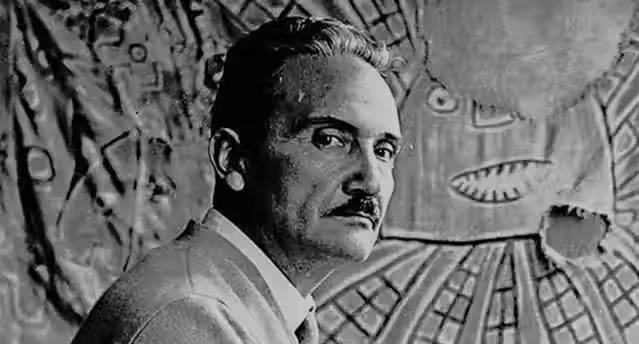
José María Arguedas: personal details
| Fact | Detail |
|---|---|
| Full name | José María Arguedas Altamirano |
| Stage name | José María Arguedas |
| Age | 58 years old at death in 1969 |
| Date of birth | January 18, 1911 |
| Country of origin | Perú |
| Place of birth | Andahuaylas, Apurímac (Perú) |
| Nationality | Peruvian |
| Occupation | Writer, anthropologist |
| Profession | Literature |
| Years active | 1935 - 1969 |
He learned Quechua before Spanish, an experience that shaped twentieth-century Peruvian literature. After his mother died when he was two, José María Arguedas grew up among Indigenous workers. That childhood gave him something no other writer of his generation had: an inside view of the Andean world. From it came Los ríos profundos and Todas las sangres. He also produced anthropological work that is studied separately today. Here are the documented facts of his life: the origins of his bilingualism, the works he wrote and the difficult final years he described in his own writing.
Who is José María Arguedas?
José María Arguedas was a Peruvian writer and anthropologist born on January 18, 1911, in Andahuaylas, Apurímac. He wrote Los ríos profundos, Yawar fiesta and Todas las sangres, and his work is among the most influential portrayals of the Andean world in Peruvian literature.
Personal information of José María Arguedas
Field: Detail
Full name: José María Arguedas Altamirano
Birthdate: January 18, 1911
Place of birth: Andahuaylas, Apurímac, Peru
Date of death: December 2, 1969
Age at death: 58 years
Nationality: Peruvian
Occupation: Writer, anthropologist and teacher
Languages: Quechua and Spanish
Main work: Los ríos profundos (1958)
Posthumous work: El zorro de arriba y el zorro de abajo (1971)
Childhood and early years of José María Arguedas
José María Arguedas Altamirano was born in Andahuaylas, Apurímac, on January 18, 1911. His father was a lawyer and traveled constantly for work; his mother died when he was two years old.
That loss shaped what followed. His relationship with his stepmother and stepbrother was difficult, and he spent much of his time with the Quechua-speaking workers in the household and surrounding area, who largely raised him.
That was the source of his bilingualism. Arguedas did not learn Quechua as an academic subject; he learned it as a childhood language, with its songs, stories and ways of naming the world. This set him apart from other Peruvian writers who explored the same subject.
He later accompanied his father on his travels around the country, which expanded that knowledge to various Andean regions. He later studied at the Universidad Nacional Mayor de San Marcos, where he also trained in ethnology.
That distinction matters: when Arguedas wrote about the Andean world, he was remembering it, not simply researching it.
Professional career of José María Arguedas
His career had two inseparable sides: that of a writer and that of anthropologist. He collected Quechua myths, songs and stories, translated older texts and worked in Peruvian cultural institutions and universities.
In literature, his first book of stories appeared in 1935 and his first novel, Yawar fiesta, in 1941. His breakthrough came in 1958 with Los ríos profundos, regarded as his masterpiece and a major twentieth-century Latin American novel.
His formal innovation is often misunderstood. Arguedas did not write his novels in Quechua. He wrote in Spanish, reshaping its syntax and rhythm under the influence of Quechua until it sounded different. He wanted readers to hear how the Andean world thinks, rather than merely read a description of it.
In 1964 he published Todas las sangres, an ambitious novel about a country divided among Andean, Creole and foreign worlds. It prompted fierce public debate among Peruvian writers and social scientists over the validity of his portrayal of Peru.
That episode affected him personally and appears clearly in the diaries that he included in his last novel.
The disagreement deserves context. Many critics and sociologists said his depiction of Andean Peru was idealized—more literary than real. Seen today, their criticism reveals as much about the period’s view of the Andes as it does about the novel itself.
Main career milestones:
- 1935: publishes his first book of stories
- 1941: publishes his first novel, Yawar fiesta
- 1958: publishes Los ríos profundos, his greatest work
- 1964: publishes Todas las sangres and sparks a national debate about the book
- The 1950s and 1960s: collects and translates Quechua myths and songs
- 1969: dies, leaving his final novel unfinished
- 1971: his final novel is published posthumously: El zorro de arriba y el zorro de abajo
Selected works by José María Arguedas
| Year | Work | Genre | Detail |
|---|---|---|---|
| 1935 | Agua | Short stories | His first published book |
| 1941 | Yawar fiesta | Novel | His first novel, about an Andean bullfight |
| 1958 | Los ríos profundos | Novel | His masterpiece, with autobiographical roots |
| 1964 | Todas las sangres | Novel | Portrait of a divided country |
| 1971 | El zorro de arriba y el zorro de abajo | Novel | Published posthumously and unfinished, with personal diaries |
Personal life of José María Arguedas
His life was marked by a tension he never concealed: he felt he belonged to two worlds that many people in Peru at the time considered incompatible.
He worked as a teacher and cultural official for much of his adult life alongside his writing. This institutional work kept him engaged in debates about Peruvian identity.
He experienced documented mental health difficulties, including prolonged depression, which he discussed openly in his writing and correspondence. In his final years, this difficulty coincided with the strain of public debate about his work.
Famosix includes this information because Arguedas himself made it public in his diaries. It is neither posthumous speculation nor an external diagnosis: the material appears in his final novel. It deserves careful treatment, but leaving it out would distort his life story.
Facts about José María Arguedas
- He learned Quechua before Spanish: it was the language of his childhood, not an academic subject.
- Household workers helped raise him: after his mother died and his relationship with his stepmother became difficult.
- He was also an anthropologist: compiled and translated Quechua myths and songs.
- His final novel includes his diaries: interwoven with the fiction, an unusual approach.
- His work sparked a national debate: Todas las sangres brought writers and social scientists into conflict.
- He reshaped literary Spanish: drawing on Quechua syntax and rhythm.
- A university and several schools bear his name: in Andahuaylas and other Peruvian cities.
Death of José María Arguedas
José María Arguedas took his own life on November 28, 1969 at the Universidad Nacional Agraria La Molina, where he worked, and died on December 2 of that year, aged 58 years.
He had written about his intention beforehand. The diaries interwoven into El zorro de arriba y el zorro de abajo clearly record his state of mind in the preceding months. He also left instructions about what he wanted to happen afterward.
His death had a profound impact on Peruvian cultural life and brought an abrupt end to the public debate about his work that had begun five years earlier.
If you or someone close to you is facing a similar situation in Peru, you can call the Ministry of Health’s mental health line at 113, option 5.
The legacy of José María Arguedas in 2026
More than fifty years later, Arguedas remains required reading in Peruvian schools and a subject of continuing study at universities in Peru and abroad, particularly in literature and anthropology.
Los ríos profundos and El zorro de arriba y el zorro de abajo continue to be republished and discussed. His name appears on universities, schools and cultural spaces across Peru, especially in Apurímac.
At Famosix, we believe his work endures because the conflict he wrote about remains unresolved. Two Perus still struggle to understand each other, and he brought them into conversation within the same book. Find more profiles in our ranking of famous Peruvians.
Conclusion
José María Arguedas wrote about the Andean world from within because he grew up in it, and he reshaped Spanish to do so. His work remains essential to understanding the divided Peru he portrayed. Famosix records his career using documented information.
Sources consulted
Sources
Public sources cited throughout this biography:
- Britannica — Britannica: José María Arguedas
- Wikipedia (español)
Recommendations
 KodfluxWebsitefrom Kodflux (opens in a new tab)YouTubefrom Kodflux (opens in a new tab)
AI for technical SEO audits and website performance monitoring.
 PagatuWebsitefrom Pagatu (opens in a new tab)
Proposals, contracts, signatures and payments for freelancers in one place.
 NebluxaWebsitefrom Nebluxa (opens in a new tab)
AI fitness app with personalized workouts and nutrition plans.
Frequently asked questions
Who was José María Arguedas?
José María Arguedas was a Peruvian writer and anthropologist born on January 18, 1911, in Andahuaylas, Apurímac. He wrote 'Los ríos profundos' and 'Todas las sangres', portraying the Andean world from within.
What are the most important works of Arguedas?
'Los ríos profundos' (1958) is regarded as his masterpiece. Other important works include 'Yawar fiesta' (1941), 'Todas las sangres' (1964) and 'El zorro de arriba y el zorro de abajo', published posthumously in 1971.
Why did Arguedas write about the Andean world?
Because he grew up in it. After his mother died when he was very young, he spent his childhood among Quechua-speaking workers, learned the language before becoming fluent in Spanish and came to know that culture from within, not as an outside observer.
How did José María Arguedas die?
He took his own life on November 28, 1969, at the Universidad Nacional Agraria La Molina, where he worked, and died on December 2 of that year, aged 58. He had left several written accounts anticipating that decision.
Did Arguedas write in Quechua or Spanish?
He wrote mainly in Spanish, but brought Quechua syntax, rhythm and vocabulary into it. This reshaped Spanish is his major formal innovation: he wanted readers to hear how the Andean world thinks and speaks.
Editor
Dilmer
Content editor
Published on August 22, 2026 · Updated on September 13, 2026
Famosix editor. He writes, reviews and updates the site’s biographies and editorial selections.
Related biographies
Browse biographiesWriters
Jaime Bayly
Jaime Bayly: Peruvian writer and host of El francotirador. His age, his books, his life with Silvia Núñez del Arco and what he is doing in 2026.
Leer biografíaWriters
Mario Vargas Llosa
Mario Vargas Llosa was a Peruvian-Spanish writer, 2010 Nobel laureate in Literature and a key figure of the Latin American Boom. Explore his life and work.
Leer biografíaWriters
Isabel Allende
Isabel Allende was born in Lima, has sold millions of books and saw a series premiere on Prime Video. Learn her age, story, works and new book of 2026.
Leer biografía