
Writers
Julio Ramón Ribeyro biography: a master of the Peruvian short story
Julio Ramón Ribeyro wrote more than a hundred stories and won the Juan Rulfo Prize in the year he died. Explore his works and life in Paris.

Written by Dilmer · Published on August 20, 2026 · Updated on September 13, 2026
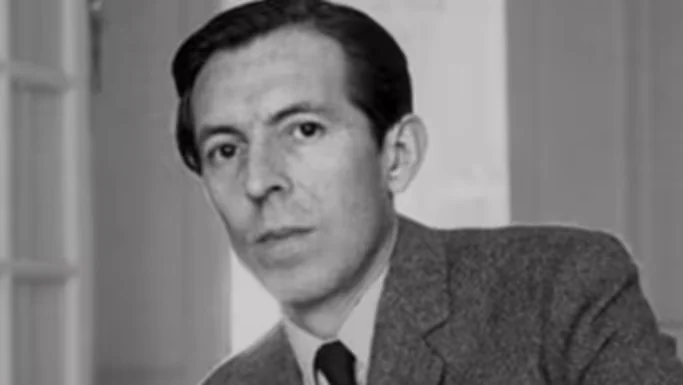
Personal details of Julio Ramón Ribeyro
| Fact | Detail |
|---|---|
| Field | Detail |
| Full name | Julio Ramón Ribeyro Zúñiga |
| Date of birth | August 31, 1929 |
| Place of birth | Lima, Peru |
| Date of death | December 4, 1994 |
| Age at death | 65 years |
| Nationality | Peruvian |
| Occupation | Writer, journalist and diplomat |
| Major work | La palabra del mudo (1972-1992) |
| Notable award | Juan Rulfo Literature Prize (1994) |
| Residence | Paris, from 1960 |
He won the most important literary prize of his career and died only months later. Julio Ramón Ribeyro received the Juan Rulfo Prize in 1994 and died on December 4 of that year, aged 65. By then, he had spent forty years writing stories about people seldom heard—workers, outsiders and ordinary residents of Lima—and gathered them under a revealing title: La palabra del mudo. Here is his documented story, from Lima to Paris, and why many consider him Peru’s finest short-story writer.
Who was Julio Ramón Ribeyro?
Julio Ramón Ribeyro was a Peruvian writer and diplomat born in Lima on August 31, 1929. He is considered one of Peru’s foremost short-story writers. His works include Los gallinazos sin plumas and the series La palabra del mudo, which brings together more than a hundred stories.
Childhood and early life of Julio Ramón Ribeyro
Julio Ramón Ribeyro Zúñiga was born in Lima on August 31, 1929, into a middle-class family whose fortunes had declined, a social position that frequently appears in his fiction.
That background shaped his literary perspective. Ribeyro wrote neither from extreme poverty nor from wealth, but from the uneasy position of someone who had seen his family lose status and observed the city with both familiarity and distance.
He studied literature and law at the Pontificia Universidad Católica del Perú. In 1952 he traveled to Spain on an Instituto de Cultura Hispánica scholarship to study journalism, then went on to France, Germany and Belgium.
His early years in Europe were marked by little money and precarious jobs alongside his writing, a period he later recounted in his diaries without romanticizing it.
Julio Ramón Ribeyro’s career
His literary career formally began in 1955 with Los gallinazos sin plumas, the story collection containing the work of the same name: two children collect garbage to feed their grandfather’s pig. It remains one of the Peruvian stories most widely read in schools.
That first book established his territory: characters already facing defeat, urban settings, endings without redemption and deliberately restrained prose rather than formal experimentation.
This restraint set him apart from his generation. While the Latin American boom favored ambitious novels and complex structures, Ribeyro remained loyal to the short story and a transparent style. For years, that cost him visibility beside his contemporaries.
He later published Cuentos de circunstancias (1958), Las botellas y los hombres (1964), Tres historias sublevantes (1964), La juventud en la otra ribera (1973) y Sólo para fumadores (1987), among other works.
All of them were collected under the general title La palabra del mudo, published in four volumes between 1972 and 1992. The title is a statement of purpose: he wrote about people no one listened to.
His professional life unfolded alongside his years in Paris, where he settled in 1960. He worked as a journalist for France-Presse from 1961 to 1971, then served as Peru’s cultural attaché in France and as its ambassador to UNESCO.
International recognition came late: in 1994 he received the Juan Rulfo Literature Prize, worth 100.000 dollars, only months before his death.
Major career milestones:
- 1952: travels to Europe on a scholarship to study journalism
- 1955: publishes Los gallinazos sin plumas
- 1958: publishes Cuentos de circunstancias
- 1960: makes Paris his home
- 1961-1971: works as a journalist at France-Presse
- 1972-1992: publishes the four volumes of La palabra del mudo
- 1994: receives the Juan Rulfo Literature Prize
Selected works by Julio Ramón Ribeyro
| Year | Work | Genre | Detail |
|---|---|---|---|
| 1955 | Los gallinazos sin plumas | Short stories | His most widely read and studied book |
| 1958 | Cuentos de circunstancias | Short stories | Establishes his urban style |
| 1964 | Tres historias sublevantes | Short stories | Peru’s coast, mountains and rainforest |
| 1975-1995 | La tentación del fracaso | Diaries | His personal journal, published in installments |
| 1987 | Sólo para fumadores | Short stories | One of his most celebrated books |
| 1972-1992 | La palabra del mudo | Complete stories | More than a hundred stories in four volumes |
Julio Ramón Ribeyro’s personal life
He lived for more than three decades in Paris without ever ceasing to write about Lima. He felt that distance helped him see his city more clearly.
A heavy smoker for much of his life, he titled one of his books Sólo para fumadores and wrote candidly about the habit, even after it caused serious health problems.
His personal journal, La tentación del fracaso, is among his most admired works. For decades he recorded his doubts, reading, illness and difficult relationship with writing, without trying to present himself favorably.
The title sets the tone. Ribeyro made failure a literary subject, not as a pose but as an observation: he was interested in lives that seemed to lead nowhere, and applied the same perspective to himself in his diaries.
Famosix draws on what he documented himself. Few writers have left such an unsparing account of themselves. That honesty helps explain why readers who have never opened his story collections still read his diaries.
Facts about Julio Ramón Ribeyro
- His complete stories are titled *La palabra del mudo*: he wrote about people no one heard.
- He won the Juan Rulfo Prize in the year he died: he received it in 1994 and died that December.
- He lived in Paris for 34 years: but most of his work is set in Lima.
- He served as ambassador to UNESCO: alongside his work as a writer and journalist.
- His diaries are as highly regarded as his stories: La tentación del fracaso has a devoted readership.
- He titled a book *Sólo para fumadores*: he wrote frankly about his own habit.
- He wrote very few novels: he stayed with the short story during the Latin American boom.
Julio Ramón Ribeyro’s death
Julio Ramón Ribeyro died on December 4, 1994, aged 65, a few months after receiving the Juan Rulfo Prize, the greatest international recognition of his career.
The coincidence of the prize and his death shaped how he was remembered in Peru. For years he had been seen as a major writer unjustly overlooked abroad; the award arrived in time to challenge that view, but too late for him to enjoy it for long.
Recognition in Peru came much earlier than international acclaim: by the seventies, he was an essential name in any discussion of the short story there.
Julio Ramón Ribeyro’s legacy in 2026
More than thirty years later, Ribeyro remains required reading in Peruvian schools. His work is regularly republished in Spain and Latin America, including anthologies from La palabra del mudo available through major publishers.
His reputation has grown steadily since his death. Many critics now rank him above several boom writers who had far more visibility in his day, and his diaries have found a new audience among younger readers.
At Famosix, we think his story shows that literary fame and quality do not always coincide. Ribeyro wrote quietly for forty years, and today he is read more than some writers who once attracted greater attention. Find more profiles in our ranking of notable Peruvians.
Conclusion
Julio Ramón Ribeyro wrote more than a hundred stories about people society overlooks and collected them as La palabra del mudo and received his major international award in the year he died. Famosix records his life using documented facts.
Sources consulted
Sources
Public sources cited throughout this biography:
- Britannica — Britannica: Julio Ramón Ribeyro
- La República — La República: who Julio Ramón Ribeyro was and what he wrote
- Wikipedia (español)
Recommendations
 KodfluxWebsitefrom Kodflux (opens in a new tab)YouTubefrom Kodflux (opens in a new tab)
AI for technical SEO audits and website performance monitoring.
 PagatuWebsitefrom Pagatu (opens in a new tab)
Proposals, contracts, signatures and payments for freelancers in one place.
 NebluxaWebsitefrom Nebluxa (opens in a new tab)
AI fitness app with personalized workouts and nutrition plans.
Frequently asked questions
Who was Julio Ramón Ribeyro?
Julio Ramón Ribeyro was a Peruvian writer born in Lima on August 31, 1929, and regarded as one of his country’s leading short-story writers. He collected more than a hundred stories as 'La palabra del mudo' and lived in Paris for three decades.
Why is the collection called La palabra del mudo?
Because Ribeyro said he wrote about people without a voice: workers, outsiders and ordinary people no one hears. He collected his stories under that title in four volumes published between 1972 and 1992.
Which are Ribeyro’s best-known stories?
'Los gallinazos sin plumas' (1955) is the most widely read and a common school text in Peru. Other notable collections are 'Cuentos de circunstancias' (1958), 'Tres historias sublevantes' (1964) and 'Sólo para fumadores' (1987).
When did Julio Ramón Ribeyro die?
He died on December 4, 1994, aged 65, the same year he received the Juan Rulfo Literature Prize, the most important international honor of his career, worth 100.000 dollars.
What did Ribeyro do in Paris?
He lived there from 1960. He worked as a journalist at France-Presse from 1961 to 1971, then served as Peru’s cultural attaché in France and its ambassador to UNESCO.
Editor
Dilmer
Content editor
Published on August 20, 2026 · Updated on September 13, 2026
Famosix editor. He writes, reviews and updates the site’s biographies and editorial selections.
Related biographies
Browse biographiesWriters
Jaime Bayly
Jaime Bayly: Peruvian writer and host of El francotirador. His age, his books, his life with Silvia Núñez del Arco and what he is doing in 2026.
Leer biografíaWriters
Mario Vargas Llosa
Mario Vargas Llosa was a Peruvian-Spanish writer, 2010 Nobel laureate in Literature and a key figure of the Latin American Boom. Explore his life and work.
Leer biografíaWriters
Isabel Allende
Isabel Allende was born in Lima, has sold millions of books and saw a series premiere on Prime Video. Learn her age, story, works and new book of 2026.
Leer biografía