
Writers
Pablo Neruda biography: the Nobel laureate who died after the coup
Pablo Neruda won the Nobel Prize in 1971 and died twelve days after Chile’s coup. Explore his life, real name and the investigation into his death.

Written by Dilmer · Published on August 17, 2026 · Updated on September 13, 2026
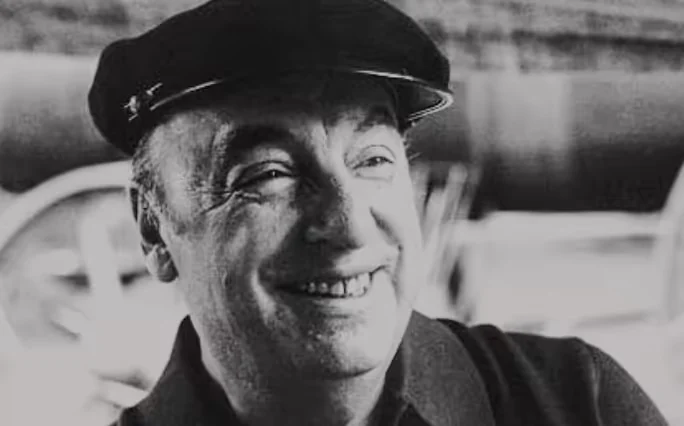
Personal details of Pablo Neruda
| Fact | Detail |
|---|---|
| Field | Detail |
| Birth name | Ricardo Eliécer Neftalí Reyes Basoalto |
| Adopted name | Pablo Neruda |
| Date of birth | July 12, 1904 |
| Place of birth | Parral, Maule, Chile |
| Date of death | September 23, 1973 |
| Age at death | 69 years |
| Place of death | Santiago, Chile |
| Nationality | Chilean |
| Occupation | Poet, diplomat and senator |
| Nobel Prize | Literature, 1971 |
He received the Nobel Prize in 1971 and died less than two years later, twelve days after the coup that overthrew his country’s government. Pablo Neruda was among the most widely read twentieth-century poets in Spanish. He wrote the Veinte poemas de amor that accompanied generations of readers, and he was also a diplomat and communist politician. His death remains the subject of a judicial investigation in Chile. This biography separates the documented facts—his real name, his work and the state of the investigation—from what remains disputed.
Who was Pablo Neruda?
Pablo Neruda was a Chilean poet, diplomat and politician born on July 12, 1904, in Parral. He wrote Veinte poemas de amor y una canción desesperada and Canto general, received the Nobel Prize in Literature in 1971 and became one of the most widely read Spanish-language poets of the twentieth century.
Childhood and early life of Pablo Neruda
Ricardo Eliécer Neftalí Reyes Basoalto was born in Parral, in Chile’s Maule region, on July 12, 1904. His mother died weeks after his birth, and he grew up in Temuco, in the rainy south of Chile.
That landscape marked him permanently: rain, forests and the southern sea appear throughout his writing, including books written thousands of kilometers away.
He began publishing poems as a teenager and adopted the pen name Pablo Neruda, partly to avoid conflict with his father, who disapproved of his literary ambition. In time, the invented name became his legal name.
His early rise was rapid: he published Crepusculario in 1923 and, just a year later, at twenty years of age, the book that made him famous.
Pablo Neruda’s career
In 1924 he published Veinte poemas de amor y una canción desesperada, written before he turned twenty. It is by far the bestselling Spanish-language poetry collection of the twentieth century, and its verses still circulate in forms he could not have imagined.
His literary career ran alongside his work in diplomacy. He served as Chilean consul in Asia and Spain. The Spanish Civil War and the killing of his friend Federico García Lorca helped shift his writing from intimate lyric poetry toward explicit political verse.
That shift gave rise to Residencia en la tierra, a dark, dense work that many critics regard as his formal peak, more ambitious than the love poems that made him popular.
In 1950 he published Canto general, a monumental poem spanning Latin America’s history, geography and struggles. Its best-known section, “Alturas de Macchu Picchu,” followed his visit to the Peruvian site.
He served as a senator for the Communist Party of Chile and went into hiding and exile because of his political activity. He later returned to diplomacy as ambassador to France, the post he held when the Nobel announcement came.
On December 10, 1971 he received the Nobel Prize in Literature in Stockholm.
Major career milestones:
- 1923: publishes Crepusculario, his first book
- 1924: publishes Veinte poemas de amor y una canción desesperada at the age of twenty
- The thirties: serves as consul in Asia and Spain; experiences the Civil War
- 1950: publishes Canto general, including “Alturas de Macchu Picchu”
- The 1940s and 1950s: serves as senator and faces political persecution
- December 10, 1971: receives the Nobel Prize in Literature
- 1974: his memoirs are published posthumously: Confieso que he vivido
Selected works by Pablo Neruda
| Year | Work | Genre | Detail |
|---|---|---|---|
| 1923 | Crepusculario | Poetry | His first published book |
| 1924 | Veinte poemas de amor | Poetry | The bestselling Spanish-language poetry collection of the twentieth century |
| 1933-1935 | Residencia en la tierra | Poetry | His denser, experimental work |
| 1950 | Canto general | Epic poetry | Surveys Latin American history |
| 1954 | Odas elementales | Poetry | Poems about everyday objects |
| 1974 | Confieso que he vivido | Memoir | Published posthumously |
Pablo Neruda’s personal life
His relationships and political activism cannot be separated from his writing. Both are extensively documented in his memoirs and correspondence.
He was an active member of the Communist Party of Chile and his political activity brought persecution and exile in the late forties, when he crossed the mountains on horseback to leave Chile.
His home at Isla Negra, facing the Pacific, is now one of Chile’s most visited literary museums, alongside his other homes in Santiago and Valparaíso.
His life has faced renewed critical scrutiny. In his own memoirs, he recounted an episode from his time as consul in Ceylon that has been described as rape. The passage has prompted public debate in Chile over tributes in his name.
Famosix includes this point because it appears in his own book. It is not an external accusation or a newly invented account: it is his text, now read in a different light.
Facts about Pablo Neruda
- Pablo Neruda was not his birth name: he was born Ricardo Eliécer Neftalí Reyes Basoalto.
- He wrote his most famous book at twenty: the Veinte poemas de amor, in 1924.
- He left Chile on horseback: he crossed the mountains while fleeing political persecution.
- He served as a senator: representing the Communist Party of Chile.
- He wrote about Machu Picchu: “Alturas de Macchu Picchu” grew out of a visit to Peru.
- His three houses are museums: Isla Negra, La Chascona and La Sebastiana.
- He wrote odes to an onion and a sock: his Odas elementales celebrate everyday objects.
Pablo Neruda’s death
Pablo Neruda died on September 23, 1973 in a clinic in Santiago, aged 69, twelve days after the September 11 coup that overthrew Salvador Allende’s government. He was seriously ill and had been moved from his Isla Negra home.
The cause of death has been investigated for years. The official account at the time cited advanced cancer; his family has argued that he may have been poisoned. In February 2023 an international panel delivered findings that his relatives viewed as confirmation of that theory.
The documented position is narrower: expert reports exist, his family brought the case before Chilean courts, and proceedings have continued. No final judicial ruling has established a conclusive answer in either direction.
Pablo Neruda’s legacy in 2026
More than fifty years later, Neruda remains one of the most published, quoted and translated poets in Spanish, and his Veinte poemas de amor are still the first poetry book many readers encounter.
His three house museums in Chile welcome visitors from around the world, and the Fundación Pablo Neruda runs outreach programs and prizes for young poets.
At the same time, his legacy faces critical reassessment, a debate that has been intense in Chile and shapes how his work is read today.
At Famosix, we believe both can be acknowledged: the scale of his work and an honest account of what he himself wrote about his life. Find more profiles in our ranking of notable Peruvians.
Conclusion
Pablo Neruda wrote one of the bestselling poetry books in Spanish at twenty, won the Nobel Prize in 1971 and died twelve days after Chile’s coup. His work and the circumstances of his death remain debated. Famosix records his life using documented facts.
Sources consulted
Sources
Public sources cited throughout this biography:
- Nobelprize — NobelPrize.org: Pablo Neruda – Biographical
- Britannica — Britannica: Pablo Neruda
- Wikipedia (español)
Recommendations
 KodfluxWebsitefrom Kodflux (opens in a new tab)YouTubefrom Kodflux (opens in a new tab)
AI for technical SEO audits and website performance monitoring.
 PagatuWebsitefrom Pagatu (opens in a new tab)
Proposals, contracts, signatures and payments for freelancers in one place.
 NebluxaWebsitefrom Nebluxa (opens in a new tab)
AI fitness app with personalized workouts and nutrition plans.
Frequently asked questions
Who was Pablo Neruda?
Pablo Neruda was a Chilean poet, diplomat and politician born on July 12, 1904, in Parral. He won the Nobel Prize in Literature in 1971 and wrote 'Veinte poemas de amor y una canción desesperada' and 'Canto general'.
What was Pablo Neruda’s real name?
His birth name was Ricardo Eliécer Neftalí Reyes Basoalto. He adopted Pablo Neruda as a pen name when young and later made it his legal name.
When and how did Pablo Neruda die?
He died on September 23, 1973, in a Santiago clinic, aged 69, twelve days after the Chilean coup. His cause of death has been investigated in court and by forensic experts for years.
What are Pablo Neruda’s best-known works?
'Veinte poemas de amor y una canción desesperada' (1924) is his most widely read book. Other important works include 'Residencia en la tierra', 'Canto general' (1950), 'Odas elementales' and his memoir 'Confieso que he vivido'.
When did Neruda receive the Nobel Prize?
He received the Nobel Prize in Literature on December 10, 1971. He was then Chile’s ambassador to France and was in Paris when the Swedish Academy informed him of the decision.
Editor
Dilmer
Content editor
Published on August 17, 2026 · Updated on September 13, 2026
Famosix editor. He writes, reviews and updates the site’s biographies and editorial selections.
Related biographies
Browse biographiesWriters
Jaime Bayly
Jaime Bayly: Peruvian writer and host of El francotirador. His age, his books, his life with Silvia Núñez del Arco and what he is doing in 2026.
Leer biografíaWriters
Mario Vargas Llosa
Mario Vargas Llosa was a Peruvian-Spanish writer, 2010 Nobel laureate in Literature and a key figure of the Latin American Boom. Explore his life and work.
Leer biografíaWriters
Isabel Allende
Isabel Allende was born in Lima, has sold millions of books and saw a series premiere on Prime Video. Learn her age, story, works and new book of 2026.
Leer biografía