
Writers
Biography of Ricardo Palma: the Beggar Librarian
Ricardo Palma created the Peruvian Traditions and rebuilt Peru’s National Library by asking for donated books. Explore his life and works.

Written by Dilmer · Published on August 23, 2026 · Updated on September 13, 2026
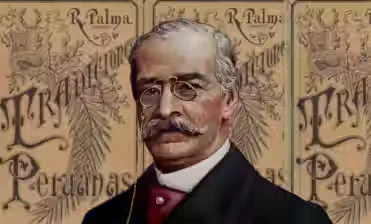
Ricardo Palma: personal details
| Fact | Detail |
|---|---|
| Full name | Manuel Ricardo Palma Carrillo |
| Stage name | Ricardo Palma |
| Age | 86 years old at death in 1919 |
| Date of birth | February 7, 1833 |
| Country of origin | Perú |
| Place of birth | Lima (Perú) |
| Nationality | Peruvian |
| Occupation | Writer, librarian |
| Profession | Literature |
| Years active | 1850 - 1919 |
When the Chilean army withdrew from Lima, Peru’s National Library was almost empty. Ricardo Palma rebuilt it by writing letters around the world requesting donated books, earning the nickname “the Beggar Librarian.” But he is remembered above all for another achievement: he created a literary genre, the Peruvian Traditions, which blends history, colonial gossip and humor. Over 86 years spanning journalism, politics and archival work, he left writings still read in schools more than a century later. Here is his biography, based on documented facts: where he came from, what he created and how he saved an institution.
Who is Ricardo Palma?
Ricardo Palma was a Peruvian writer, librarian and politician born in Lima on February 7, 1833. He created the Peruvian Traditions, a distinct literary genre blending history and legend with humor, and led the rebuilding of Peru’s National Library after the War of the Pacific.
Personal information of Ricardo Palma
Field: Detail
Full name: Manuel Ricardo Palma Carrillo
Birthdate: 7 February 1833
Place of birth: Lima, Peru
Date of death: 6 October 1919
Age at death: 86 years
Place of death: Miraflores, Lima
Nationality: Peruvian
Occupation: Writer, librarian and politician
Major work: Peruvian Traditions
Position: Director of the National Library (1884-1912)
Childhood and early years of Ricardo Palma
Manuel Ricardo Palma Carrillo was born in Lima on February 7, 1833, in a family of humble origin, a starting point worth remembering because his writings would become the most widely read account of Lima’s colonial aristocracy.
He grew up in a Lima that still preserved the architecture, customs and stories of the viceroyalty, just a decade after independence. That city of balconies, convents and inherited rumors is exactly the material with which he would later write.
He started young in journalism and politics, two activities that in nineteenth century Peru went hand in hand and that even took him to exile in Chile during a period of his life.
At Famosix, one detail deserves emphasis: Palma was not a scholar confined to his study. He served in the Navy, took part in politics, faced persecution and participated in the defense of Lima during the war. The streets shaped his archive as much as books did.
This double condition of man of action and man of the library explains the tone of his writing. His texts do not have the solemnity of a professional historian but rather the agility of someone used to writing for newspapers and capturing the attention of a reader who can turn the page at any moment.
Ricardo Palma's professional career
His great contribution was to create a literary genre. The Peruvian Traditions are neither short stories, historical chronicles nor sketches of social customs: they are all three at once, told by a narrator who interrupts, laughs and takes sides.
The formula worked immediately. He published the first series in 1872 and continued writing them for decades, producing hundreds of accounts spanning the Inca era to the republic, with a particular fondness for colonial gossip.
That choice has a little-discussed consequence. By telling Peruvian history from anecdote and rumor, Palma made it readable for a public that would never have opened a historical treatise, and that is the reason why his texts are still in schools.
The other chapter of his life is National Library of Peru. During the occupation of Lima in the Pacific War, the institution was looted and was reduced to little more than its walls.
Palma undertook its reconstruction. He wrote to governments, libraries, publishers and individuals across several continents asking them to donate books, a method that earned him the nickname "beggar librarian" and proved effective: the new library opened on 28 July 1884 and he directed it until 1912, when he resigned due to disagreements with the government.
Main career milestones:
- The 1850s and 1860s: works in journalism, politics and the Navy
- 1872: publishes the first series of Peruvian Traditions
- 1881-1883: the National Library is looted during the Pacific War
- 28 July 1884: reopens Peru’s National Library
- 1884-1912: directs the institution for almost three decades
- 1893-1896: the four-volume edition of the Traditions
- 1912: resigns as director of the National Library
Notable works by Ricardo Palma
| Work | Genre | Detail |
|---|---|---|
| Tradiciones peruanas | Historical narrative | His principal work, published in series beginning in 1872 |
| Anales de la Inquisición de Lima | History | Research into the tribunal in Peru |
| Papeletas lexicográficas | Linguistics | Proposed Peruvian words for inclusion in the dictionary |
| Poesías | Poetry | Verse from his early years |
| La bohemia de mi tiempo | Memoir | A portrait of his literary generation |
Personal life of Ricardo Palma
Palma was corresponding member of the Royal Spanish Academy and had a tense, well-documented relationship with the institution: for years he proposed adding Peruvian and other Latin American words to its dictionary, but most proposals were rejected at the time.
That dispute makes him a pioneering figure. He argued that Latin American Spanish was not a defective version of Spain’s Spanish but a living language entitled to define its own words—an argument that seems obvious today but was far from accepted in the nineteenth century.
His family continued his work. His daughter Angélica Palma was a writer who promoted his work, and the Miraflores house where he lived now serves as a museum dedicated to his memory.
In time, many of his proposed words entered the dictionary through common usage. The debate he opened more than a century ago—who decides which words are correct?—continues whenever the Academy adds a Latin American term.
At Famosix, we record what is documented. Many charming stories circulate about Palma; he invented some himself in his Tradiciones. Distinguishing the man from the narrator is part of the work.
Facts about Ricardo Palma
- He was called the Beggar Librarian: he requested book donations in letters sent around the world.
- He created a literary genre: the literary tradiciones did not exist before him.
- He challenged the Royal Spanish Academy: he wanted Peruvian words added to its dictionary, but his proposals were rejected.
- He was exiled in Chile: for his political participation in nineteenth century Peru.
- His daughter Angélica was also a writer: and worked on the dissemination of his work.
- He reopened the National Library on July 28: the same date as Peru’s Independence Day celebrations.
- He was buried with ministerial honors: a national period of mourning was also declared.
Death of Ricardo Palma
Ricardo Palma died on 6 October 1919 in Miraflores, Lima, at the age of 86 years, seven years after leaving the direction of the National Library.
The recognition was exceptional for a writer: he was buried with honors accorded to a minister of state and it was decreed national mourning. Rarely in Peruvian history has an author received treatment normally reserved for figures of political or military power.
Ricardo Palma’s legacy in 2026
More than a century later, his Peruvian Traditions remain required school reading in Peru and have introduced generations of readers to the country’s literature.
His name appears on a Lima university, streets, schools and the Ricardo Palma House Museum in Miraflores, which preserves his personal library and desk. Peru’s National Library, the institution he rebuilt by asking the world for books, remains the country’s principal library.
At Famosix, we believe his greatest achievement was one of method rather than literature alone: he understood that history survives when someone tells it engagingly. Find more profiles in our ranking of famous Peruvians.
Conclusion
Ricardo Palma created a genre for telling Peru’s stories and rebuilt its national library by writing to strangers for books. He died in 1919 with honors accorded to a minister, and his Tradiciones remain on school reading lists. At Famosix, we document his career using verifiable records.
Sources consulted
- National Library of Peru: 106 years after the death of Ricardo Palma, the 'Beggar Librarian'
- Miguel de Cervantes Virtual Library: Biography of Ricardo Palma
Sources
Public sources cited throughout this biography:
- Bnp — National Library of Peru: 106 years after the death of Ricardo Palma, the 'Beggar Librarian'
- Cervantesvirtual — Miguel de Cervantes Virtual Library: Biography of Ricardo Palma
- Wikipedia (español)
Recommendations
 KodfluxWebsitefrom Kodflux (opens in a new tab)YouTubefrom Kodflux (opens in a new tab)
AI for technical SEO audits and website performance monitoring.
 PagatuWebsitefrom Pagatu (opens in a new tab)
Proposals, contracts, signatures and payments for freelancers in one place.
 NebluxaWebsitefrom Nebluxa (opens in a new tab)
AI fitness app with personalized workouts and nutrition plans.
Frequently asked questions
Who was Ricardo Palma?
Ricardo Palma was a Peruvian writer, librarian and politician born in Lima on February 7, 1833. He created the “Tradiciones peruanas,” a distinct genre blending history, legend and humor, and directed Peru’s National Library.
What are the Tradiciones peruanas?
They are short accounts combining historical facts with imagination, oral legends and distinctly Lima humor. Palma wrote hundreds over his lifetime and published them in several series beginning in 1872.
Why was Ricardo Palma called the beggar librarian?
Because after the Pacific War the National Library was looted and he wrote to institutions and people around the world asking for book donations. With this method he managed to gather tens of thousands of volumes.
When did Ricardo Palma die?
He died on October 6, 1919, in Miraflores, Lima, aged 86. He was buried with honors accorded to a minister of state, and a national period of mourning was declared in his memory—an unusual tribute for a writer.
How long did Ricardo Palma direct the National Library?
Almost three decades. He reopened Peru’s National Library on July 28, 1884, and remained its director until 1912, when he resigned over disagreements with the government of the time.
Editor
Dilmer
Content editor
Published on August 23, 2026 · Updated on September 13, 2026
Famosix editor. He writes, reviews and updates the site’s biographies and editorial selections.
Related biographies
Browse biographiesWriters
Jaime Bayly
Jaime Bayly: Peruvian writer and host of El francotirador. His age, his books, his life with Silvia Núñez del Arco and what he is doing in 2026.
Leer biografíaWriters
Mario Vargas Llosa
Mario Vargas Llosa was a Peruvian-Spanish writer, 2010 Nobel laureate in Literature and a key figure of the Latin American Boom. Explore his life and work.
Leer biografíaWriters
Isabel Allende
Isabel Allende was born in Lima, has sold millions of books and saw a series premiere on Prime Video. Learn her age, story, works and new book of 2026.
Leer biografía